Editor's PickGovernanceHuman RightsJusticePeace BuildingPeace and JusticePolitics
Home Our latest stories AdvocacyDiplomacyFeatureGeoPoliticsHuman RightsJusticeLeadershipPeace & Democracy Nothing About Greenland Without Greenland: Why the Commonwealth Must Defend Arctic Sovereignty

Nothing About Greenland Without Greenland: Why the Commonwealth Must Defend Arctic Sovereignty

January 11th, 2026

Greenland’s future belongs to Greenlanders, not to outside powers, not to strategic fantasies, and not to the loudest military voice in the room. Recent threats to “acquire” Greenland are a stress test for the rules-based order the Commonwealth claims to stand for, and the Arctic is where that test is now unfolding.

by Justin R. Langan

When a powerful state starts talking about taking someone else’s territory, especially with the suggestion that force could be on the table, every country that claims to believe in sovereignty and self-determination has a choice: treat it as background noise, or treat it as the alarm bell it is.

In early January 2026, that alarm got louder. Reports described U.S. officials floating that “all options,” including military force, remained possible to “acquire” Greenland. European leaders responded bluntly. Greenland belongs to its people, and decisions about Greenland cannot be made without the involvement of Greenland and Denmark.

This matters far beyond Denmark’s realm. It is not only about one island, Kalaallit Nunaat, at the top of the world. It is about whether the world will uphold the basic post–Second World War rule that borders are not redrawn by threat or coercion. This principle is anchored in Article 2(4) of the United Nations Charter, a cornerstone of international law that explicitly forbids both the threat and use of force against another state’s territorial integrity or political independence.

For the Commonwealth, 56 countries bound, at least on paper, by commitments to democracy, human rights, and the rule of law, this is a credibility moment.

Greenland is not a bargaining chip. It is a people with rights.

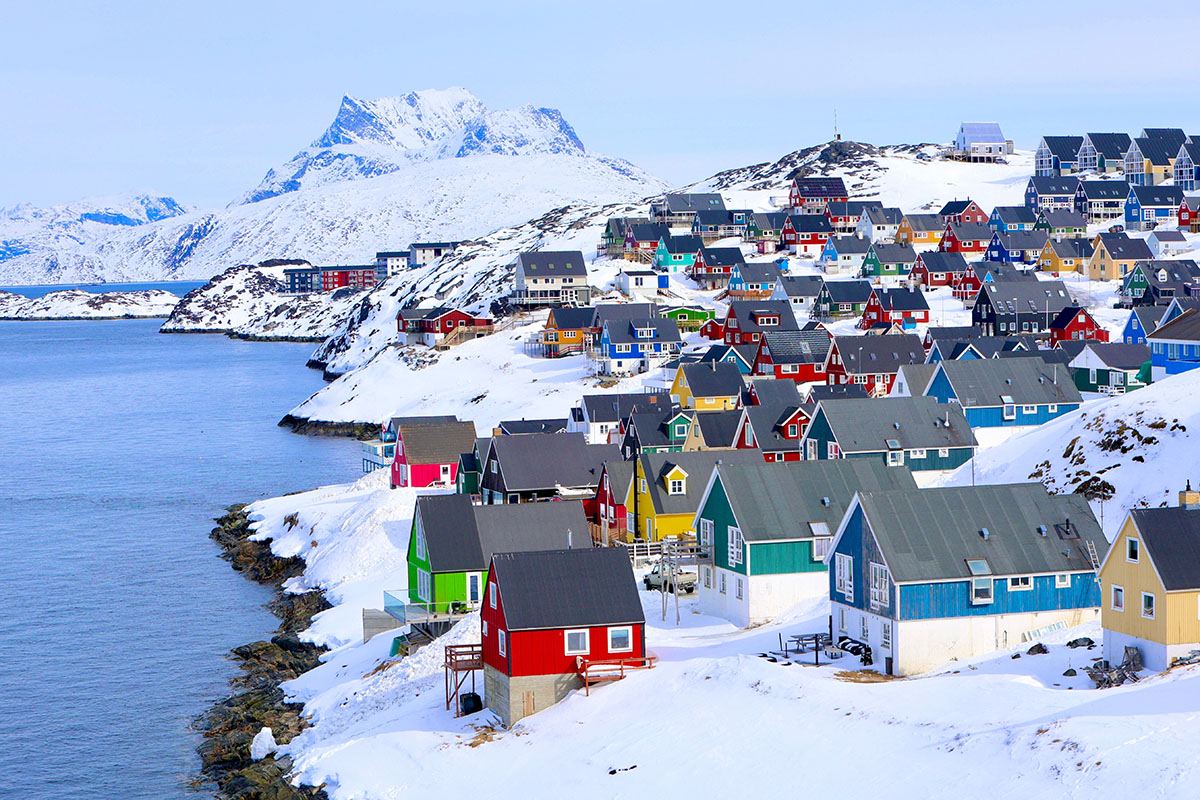
Greenland is a self-governing country within the Kingdom of Denmark, with its own parliament, Inatsisartut, and government, Naalakkersuisut. Its modern political story is defined by self-determination. The 2009 Act on Greenland Self-Government recognizes Greenlanders as a people and establishes a democratic pathway to independence. That independence decision rests with Greenlanders.

In 2024, Greenland published a landmark Foreign, Security, and Defense Strategy titled Greenland in the World: Nothing about us without us, explicitly asserting that Greenland must be a principal actor in decisions that shape its future.

That phrase, nothing about us without us, is not branding. It is a warning against a recurring Arctic pattern in which decisions are made in southern capitals, justified by security and markets, and then imposed on northern communities, with “consultation” offered as an afterthought.

Why this is happening now: security, minerals, and a melting map

The Arctic region is experiencing faster temperature increases than the global average, creating opportunities for new shipping routes but also increasing competition for natural resources and construction sites. The world, along with Greenland itself, now views the territory as a vital economic and strategic location. This includes mineral development and foreign investment that Greenland views as part of its efforts to build greater economic self-sufficiency.

Layer security onto that. The United States already operates a significant base in Greenland, Pituffik Space Base, under agreements with the Kingdom of Denmark.

So yes: there are real strategic interests in Greenland. But strategic interest does not create ownership. “Need” is not a legal category. And the idea that a country can be “acquired” because it is “essential” is precisely the kind of logic that collapses international order everywhere else, too.

The Arctic Council is a living test of Arctic governance

One of the strongest arguments against coercive Arctic geopolitics is that the region already has governance institutions built to prioritize cooperation, stability, and the rights of Arctic peoples.

In May 2025, Arctic states and Indigenous Permanent Participants reaffirmed commitments to peace, stability, and cooperation through the Arctic Council, issuing the Romssa–Tromsø Statement. The Canadian government issued a statement emphasizing the Council as the pre-eminent forum for circumpolar collaboration.

In May 2025, the Kingdom of Denmark assumed the Arctic Council chairmanship for 2025–2027, with Greenland in a prominent leadership role, thereby shaping the agenda.

That is the direction Arctic governance should move. More Inuit and Indigenous leadership, more community-driven policy, and more diplomacy, not less.

What Commonwealth countries should do. Now.

The Commonwealth is not a military alliance. It does not need to pretend to be one. But it is a values-based community with diplomatic reach across every ocean, including several Arctic and near-Arctic states among its membership, such as Canada and the United Kingdom. If those values mean anything, there are concrete steps Commonwealth countries can take immediately.

1) Speak with one voice: Greenland’s future is for Greenlanders to decide.
Commonwealth governments should publicly affirm the principle that Greenland belongs to its people, and that no external power has the right to compel a transfer of sovereignty by threat, economic coercion, or force. European Union leadership has already used this language in response to recent threats. The Commonwealth should do the same.

2) Put international law back at the centre of Arctic security.
The UN Charter’s core rule, no threat or use of force against another state’s territorial integrity, must be treated as non-negotiable. This is not abstract legalism. It is the minimum barrier between diplomacy and conquest.

3) Invest in Arctic self-determination as capacity, not charity.
Governments should support Greenlandic institutions through defined methods that focus on education, governance capacity, climate science, and community-led infrastructure development.

4) Raise the standard on Arctic investment and minerals.
The economic development of Greenland through mineral extraction requires Commonwealth nations and businesses to establish partnerships which maintain absolute integrity. The Arctic requires a collective of Indigenous rights protection, environmental safeguards, local benefit sharing, and transparency to prevent the region from developing into a new form of green extraction politics. Greenland’s policy documents and strategies reflect the centrality of resources and investment to its economic pathway.

5) Back Arctic institutions where Indigenous peoples have standing power.
The Arctic Council’s model, which includes Indigenous Permanent Participants at the table, is one of the world’s most essential governance innovations, and as such, requires continued support from Commonwealth nations; it benefits their interests despite increasing international political tensions.

The deeper point: Arctic sovereignty is about the world we’re choosing

The world focuses on Greenland because this territory represents where climate change intersects with military defense systems and natural resource extraction needs. The basic principle, which stands as the main issue, remains straightforward. People are not property, and territory is not a prize.

If the Commonwealth wants to remain credible as a community of law, democracy, and human dignity, it must address Greenland’s sovereignty threats as matters of enduring significance beyond the news cycle duration. It must name the problem (coercion) and defend the alternative. That alternative is self-determination, Indigenous-led governance, and peaceful cooperation in the Arctic.

Greenland is telling the world, clearly, nothing about us without us. The Commonwealth should answer, not on our watch.

Share

About the author

Justin Langan

Justin Langan is an internationally lauded LGBTQ+ Indigenous activist residing in Ottawa, Canada. He specializes in youth empowerment, sustainability, and humanitarianism. Justin is the Executive Director of O’KANATA, holds a B.A. in Political Science from the University of Manitoba, and is committed to integrating traditional Indigenous knowledge with modern solutions to create sustainable, community-driven change.

Submit your content

Submit a video
Submit an article

Greenland’s future belongs to Greenlanders, not to outside powers, not to strategic fantasies, and not to the loudest military voice in the room. Recent threats to “acquire” Greenland are a stress test for the rules-based order the Commonwealth claims to stand for, and the Arctic is where that test is now unfolding.

by Justin R. Langan

When a powerful state starts talking about taking someone else’s territory, especially with the suggestion that force could be on the table, every country that claims to believe in sovereignty and self-determination has a choice: treat it as background noise, or treat it as the alarm bell it is.

In early January 2026, that alarm got louder. Reports described U.S. officials floating that “all options,” including military force, remained possible to “acquire” Greenland. European leaders responded bluntly. Greenland belongs to its people, and decisions about Greenland cannot be made without the involvement of Greenland and Denmark.

This matters far beyond Denmark’s realm. It is not only about one island, Kalaallit Nunaat, at the top of the world. It is about whether the world will uphold the basic post–Second World War rule that borders are not redrawn by threat or coercion. This principle is anchored in Article 2(4) of the United Nations Charter, a cornerstone of international law that explicitly forbids both the threat and use of force against another state’s territorial integrity or political independence.

For the Commonwealth, 56 countries bound, at least on paper, by commitments to democracy, human rights, and the rule of law, this is a credibility moment.

Greenland is not a bargaining chip. It is a people with rights.

Greenland is a self-governing country within the Kingdom of Denmark, with its own parliament, Inatsisartut, and government, Naalakkersuisut. Its modern political story is defined by self-determination. The 2009 Act on Greenland Self-Government recognizes Greenlanders as a people and establishes a democratic pathway to independence. That independence decision rests with Greenlanders.

In 2024, Greenland published a landmark Foreign, Security, and Defense Strategy titled Greenland in the World: Nothing about us without us, explicitly asserting that Greenland must be a principal actor in decisions that shape its future.

That phrase, nothing about us without us, is not branding. It is a warning against a recurring Arctic pattern in which decisions are made in southern capitals, justified by security and markets, and then imposed on northern communities, with “consultation” offered as an afterthought.

Why this is happening now: security, minerals, and a melting map

The Arctic region is experiencing faster temperature increases than the global average, creating opportunities for new shipping routes but also increasing competition for natural resources and construction sites. The world, along with Greenland itself, now views the territory as a vital economic and strategic location. This includes mineral development and foreign investment that Greenland views as part of its efforts to build greater economic self-sufficiency.

Layer security onto that. The United States already operates a significant base in Greenland, Pituffik Space Base, under agreements with the Kingdom of Denmark.

So yes: there are real strategic interests in Greenland. But strategic interest does not create ownership. “Need” is not a legal category. And the idea that a country can be “acquired” because it is “essential” is precisely the kind of logic that collapses international order everywhere else, too.

The Arctic Council is a living test of Arctic governance

One of the strongest arguments against coercive Arctic geopolitics is that the region already has governance institutions built to prioritize cooperation, stability, and the rights of Arctic peoples.

In May 2025, Arctic states and Indigenous Permanent Participants reaffirmed commitments to peace, stability, and cooperation through the Arctic Council, issuing the Romssa–Tromsø Statement. The Canadian government issued a statement emphasizing the Council as the pre-eminent forum for circumpolar collaboration.

In May 2025, the Kingdom of Denmark assumed the Arctic Council chairmanship for 2025–2027, with Greenland in a prominent leadership role, thereby shaping the agenda.

That is the direction Arctic governance should move. More Inuit and Indigenous leadership, more community-driven policy, and more diplomacy, not less.

What Commonwealth countries should do. Now.

The Commonwealth is not a military alliance. It does not need to pretend to be one. But it is a values-based community with diplomatic reach across every ocean, including several Arctic and near-Arctic states among its membership, such as Canada and the United Kingdom. If those values mean anything, there are concrete steps Commonwealth countries can take immediately.

1) Speak with one voice: Greenland’s future is for Greenlanders to decide.
Commonwealth governments should publicly affirm the principle that Greenland belongs to its people, and that no external power has the right to compel a transfer of sovereignty by threat, economic coercion, or force. European Union leadership has already used this language in response to recent threats. The Commonwealth should do the same.

2) Put international law back at the centre of Arctic security.
The UN Charter’s core rule, no threat or use of force against another state’s territorial integrity, must be treated as non-negotiable. This is not abstract legalism. It is the minimum barrier between diplomacy and conquest.

3) Invest in Arctic self-determination as capacity, not charity.
Governments should support Greenlandic institutions through defined methods that focus on education, governance capacity, climate science, and community-led infrastructure development.

4) Raise the standard on Arctic investment and minerals.
The economic development of Greenland through mineral extraction requires Commonwealth nations and businesses to establish partnerships which maintain absolute integrity. The Arctic requires a collective of Indigenous rights protection, environmental safeguards, local benefit sharing, and transparency to prevent the region from developing into a new form of green extraction politics. Greenland’s policy documents and strategies reflect the centrality of resources and investment to its economic pathway.

5) Back Arctic institutions where Indigenous peoples have standing power.
The Arctic Council’s model, which includes Indigenous Permanent Participants at the table, is one of the world’s most essential governance innovations, and as such, requires continued support from Commonwealth nations; it benefits their interests despite increasing international political tensions.

The deeper point: Arctic sovereignty is about the world we’re choosing

The world focuses on Greenland because this territory represents where climate change intersects with military defense systems and natural resource extraction needs. The basic principle, which stands as the main issue, remains straightforward. People are not property, and territory is not a prize.

If the Commonwealth wants to remain credible as a community of law, democracy, and human dignity, it must address Greenland’s sovereignty threats as matters of enduring significance beyond the news cycle duration. It must name the problem (coercion) and defend the alternative. That alternative is self-determination, Indigenous-led governance, and peaceful cooperation in the Arctic.

Greenland is telling the world, clearly, nothing about us without us. The Commonwealth should answer, not on our watch.