Building Better Bridges: A dialogue with Engineer and PhD researcher Tapunu’u Vensel Margraff
January 19by Jasmine Koria
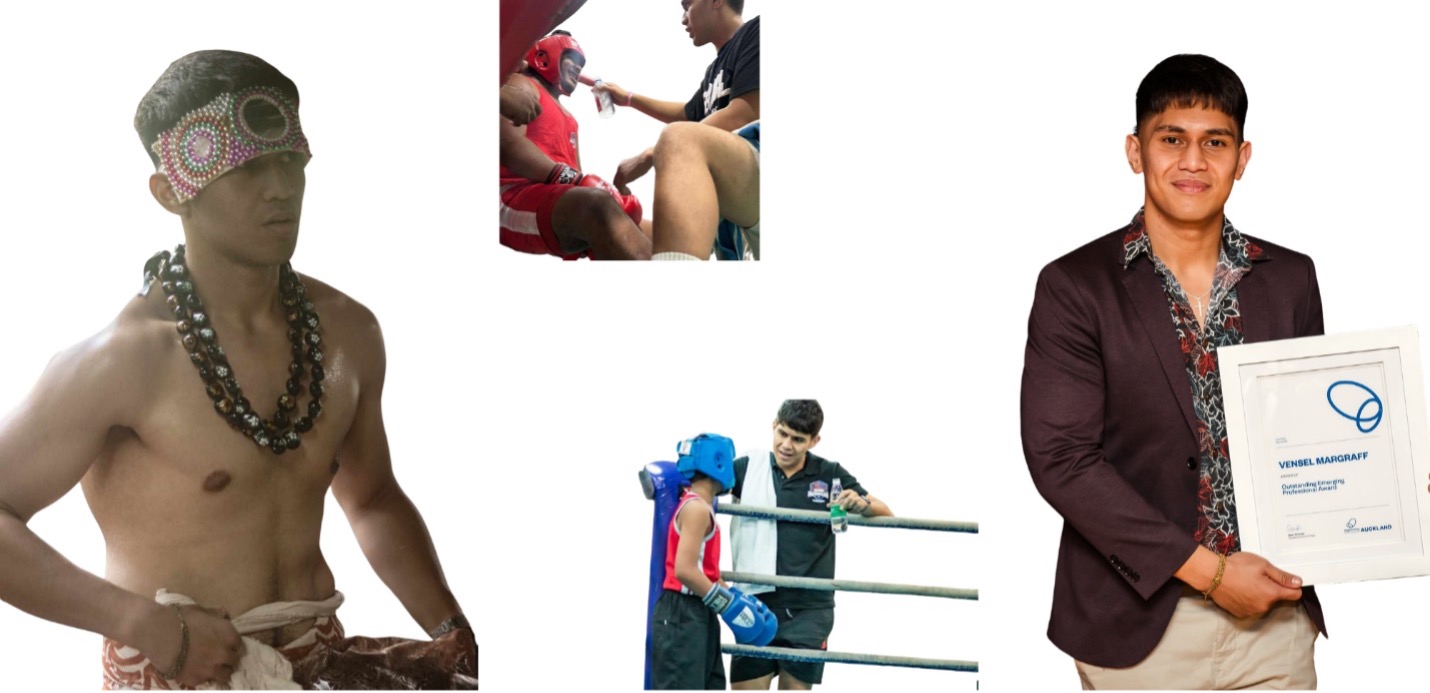
Twenty-five-year-old Vensel Margraff has always been a high achiever. In his school years, he was Head Boy and dux (Valedictorian, highest-scoring senior student) of Robert Louis Stevenson Secondary school, and then also dux of the National University of Samoa’s foundation year program in 2017. As an undergraduate student in 2020, he won the Top Pacific New Zealand Scholar Award for excellent academic performance. When we spoke about his numerous accolades a few months ago, Vensel was adamant that his premier achievement is being a son of Samoa, of his family, and of the village of Vailima which has bestowed him with the chiefly title of ‘Tapunu’u’.
“When you’re a young person,” he said, “you want to change the world.” We laughed about the odyssey of being a teenager, full of hope…and living on a tiny island in the middle of the biggest geographic entity on Earth. As we chatted, we were both reminded that the gap between the ambition of youth and the crowded, sun-scorched reality of everyday life in the Commonwealth Pacific is still very much there. For Vensel, this space was where he found his calling.
A Local Boy with Global Dreams
“I took a gap year after Foundation,” Vensel told me. In our highly competitive Polynesian society, stepping back at what looks to be the most crucial part of your academic journey, is almost unheard of. Yet, Vensel, says, “I worked at the Land Transport Authority (LTA), and it opened my eyes.” Vensel was initially the recipient of the coveted scholarship which is awarded annually to the top Science and top Overall National University of Samoa Foundation Student to study Medicine in New Zealand. However, his year-long experience working amongst the civil engineers whose hard work keeps the road and transportation systems in Samoa going inspired him. When he finally did leave for New Zealand, Vensel took a complete right turn and enrolled for a Bachelor of Engineering. If his current PhD candidateship at the University of Auckland is anything to go by, this risk has paid dividends, and more.
According to Vensel, engineering is about choosing and using the right “mechanisms”. He believes that indigenous Pacific cultures already have some of the best problem-solving tools for their own contexts. Modern technologies should amplify the effectiveness of these, not replace them. When I asked how he envisions this balance being struck, Vensel told me: “(we must) bridge the gap between maintenance and social practices.” Like most engineers, he is very solution focused.
Research for Resilience: From Tsunamis to Social Systems
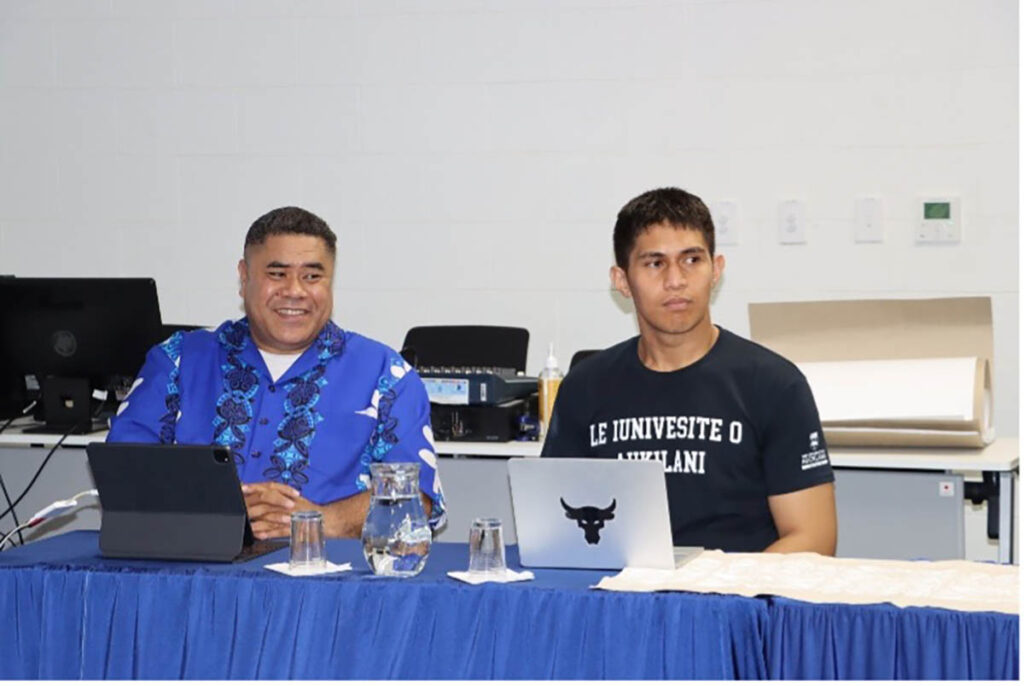
“My research is looking at social simulations of tsunami resilience, which is something I’ve learned to enjoy,” Vensel told me. “As engineers, we tend to favor robust infrastructural, physical, analytical approaches and considerations. Now I’m just diving into the literature of social resilience and what that means from both a bottom-up and top-down approach. I’m considering all actors that make up our communities. If our approaches to disaster management are not community-centered, if people aren’t aware of those interventions and how to interact with them, then none of our research or ‘solutions’ will solve anything!”
The Pacific is prone to dozens of natural disasters every year, from tsunamis to tropical cyclones, to flash flooding and earthquakes. Like most children of the poster-paradise Pacific who grew up seeing iron roofing fly off unstable houses during the rainy season and watching homes and businesses spend the Christmas season mopping up the un-Paradise-like collateral of mosquitoes and mud, Vensel is both optimistic and ambitious.
The end-goal of Vensel’s research is to produce a tool to capture the many social (and socio-political) dynamics within local villages and districts, and between villages and external partners. This will enable us, according to Vensel, to really see how these parties work together to either make or break community disaster resilience in Samoa. Ever mindful of the fact that Samoan indigenous information transmission doesn’t happen through complex graphs and statistics, Vensel is prioritizing the storytelling and visual elements of his upcoming product.
“Research in the Pacific is very different from in the West. There’s a long pre-engagement period that needs to happen. Be on island, knock on doors, have conversations, meet people where they are instead of always pushing them to meet your ideas. A participatory approach- connect with stakeholders.” In a country as small and interconnected as Samoa, researchers like Vensel are both in luck and out of it- everyone is a stakeholder.
Community at the Center: Merit Over Spotlight
In thinking about how ‘everyone’ can be incorporated into the decision-making that influences the built world, I asked Vensel how well he felt his workspaces were doing in empowering youth. His answer intrigued me: “I think it’s very important to have youth representation in workplaces, to a degree. I am also aware that these systems do exist because in a space like engineering, if you’re going to, for instance, construct a bridge, you want to make sure it’s the strongest possible bridge. If you’re inviting simply based on the need to fill a quota, to an extent you’re compromising the merit. I believe in establishing a threshold of what’s safe, and when you do recruit, ensure that they are of the right capacity.” Vensel is concerned, and rightly so. “These are important decisions that affect our society. The youth we give decision-making power should not just be there for the spotlight.”
Vensel believes bridges both literally and figuratively fill the gaps in our world, and bridge-builders have enormous power. He calls for responsible representation, and for accountability. “We can’t just give opportunities to whoever talks the loudest. They need a proven track record, and to have done the work in their actual communities.”
Speaking of track records, Vensel’s engineering and postgraduate endeavors take up only part of his already busy schedule. After hours, he helps run a growing non-governmental organization, Young Athletes Samoa, which is a support network by and for young local sporting talent. Passionate about being present in a measurable way, Vensel coaches at local start-up, Fight Legacy Combat Gym, and has been a gold and silver medalist in Wrestling, Kickboxing and Mixed Martial Arts events in Samoa and New Zealand. He was recently also Head Coach of the Under 17 National Boxing team which represented Samoa at the Tri-Nations Tournament hosted by our Pacific neighbors Fiji.
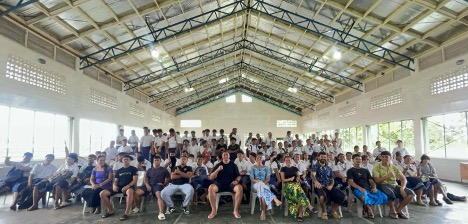
(Image from Young Athletes of Samoa Social Media)
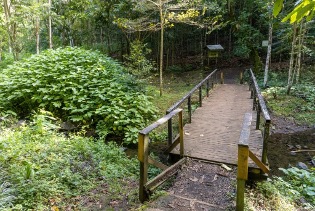
When asked how he manages to balance the many hats he wears, Vensel simply stated that he values everything he does, and what one values, one shows up for. We spoke then of the mountain, Vaea, which is accessible mainly via Vensel’s village, Vailima, but which is a national treasure. As the burial site of Scottish author Robert Louis Stevenson, whose Treasure Island and Dr. Jekyll and Mr. Hyde continue to captivate the world, it is one of the most famous mountains in the Pacific. According to Samoan legend, Mt. Vaea was once simply ‘Vaea’, a man who, after watching death and dissolution in his family, became isolated and turned into the mountain we see today. A bridge in both myth and geography, Mt. Vaea actively connects but also separates many of the urban villages on Upolu Island. When Vensel shared that he was proud his village hosts one of the main entry points into the storied site, I was immediately reminded of a poetic line by Samoan author Seiuli Seti Ah Young: “Wherever you are is the other side of Mount Vaea.” And with young people such as Vensel literally building the futures of our islands, I know we can all make it across.