
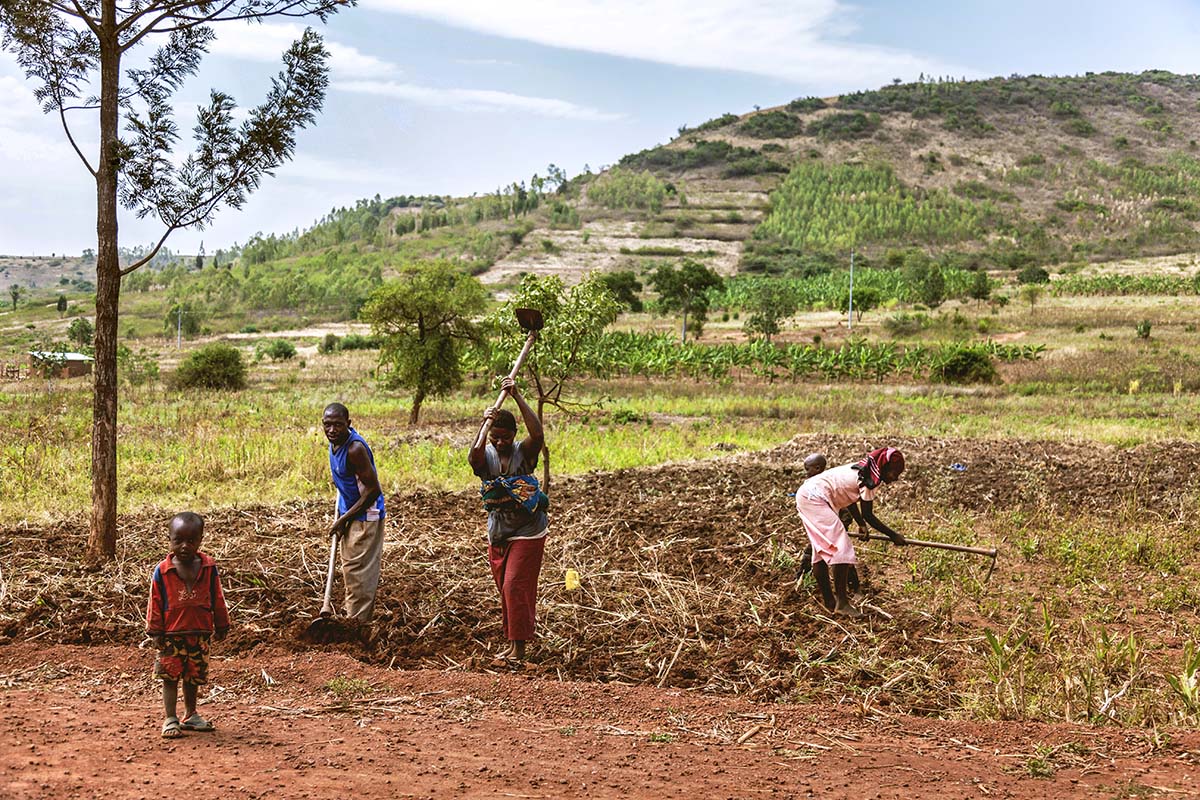
Changing Climate and the Vulnerability of Subsistence Farmers in Sub-Saharan Africa Despite Improved Weather Forecasting
January 11by Evans Ijakaa
Weather forecasting in Africa continues to improve, with many countries strengthening their meteorological departments to track weather patterns and provide near real-time information and updates on changing climatic conditions. However, on the ground, particularly in rural parts of sub-Saharan Africa, millions of subsistence farmers remain disconnected from this information. As weather patterns become increasingly unpredictable, this gap continues to have consequences for agricultural productivity and food security in the region.
A significant share of the rural population in sub-Saharan Africa, about 70 per cent, depends heavily on climate-sensitive agricultural systems. Pastoral and marginal agro-pastoral communities are among the most vulnerable to these changes.
According to the UN Food and Agriculture Organization (FAO), food insecurity in Africa is worsening. In 2024, more than 307 million people, over 20 per cent of the continent’s population, faced hunger. Projections suggest that by 2030, nearly 60 per cent of the world’s hungry could live in Africa, with climate change among the leading contributing factors.
Ironically, this crisis is unfolding at a time when meteorological science has never been stronger.
When Forecasts Improve, But Farmers Are Left Behind
Across the continent, meteorological departments are strengthening research capacity and improving real-time weather monitoring. The World Meteorological Organization (WMO), through its Regional Office for Africa headquartered in Addis Ababa, works with National Meteorological and Hydrological Services (NMHSs) across 53 African countries to improve data exchange, forecasting capacity and the development of early warning systems. Many countries now operate their own national meteorological departments with increasingly advanced tools.
However, on the ground, many subsistence farmers remain in the dark about changing weather patterns. As a result, they often plant and harvest at the wrong time, a challenge that continues to deepen rural poverty and worsen food insecurity.
For decades, agricultural failure in Africa has largely been framed around seed choice and soil fertility. This has driven the promotion of early-maturing or drought-resistant crops, while the prioritisation of staple crops such as maize has steadily declined, with only a few organisations continuing to invest heavily in their productivity. Today, staple food crops are producing lower yields compared to previous decades, when many rural households could still depend on agriculture as a reliable source of income and livelihood.
While seed selection and soil conservation strategies remain important, have we really adequately accounted for the role that changing weather patterns are playing in the decline of agricultural yields?
Why are crops that once thrived, like maize, cassava and millet, now seemingly struggling across regions where they were once reliable?
The Collapse of Traditional Climate Knowledge
Across much of Africa, farmers and fishing households continue to rely on inherited agricultural calendars and indigenous weather indicators such as stars, moon cycles, wind patterns and animal behaviour. These systems have guided farming and fishing practices for generations. However, climate change has weakened their reliability.
Small-scale farmers in sub-Saharan Africa are especially vulnerable. According to a report by the Stockholm International Water Institute, about 95 per cent of small-scale farmers in Africa depend on rain-fed agriculture, leaving them highly exposed to shifting rainfall patterns. Rainy seasons have become shorter, less predictable and increasingly inconsistent. At the same time, droughts, floods and heatwaves have grown more frequent and severe, destroying harvests and displacing communities.
Climate change has also accelerated the spread of new pests and diseases, such as the fall armyworm, overwhelming traditional coping mechanisms. The result is higher crop failure, rising debt and deepening food insecurity. Many farmers are left without the knowledge or support to adjust their practices to unpredictable conditions, despite the growing availability of climate and weather information within meteorological departments.
Poor Forecasting, High Costs
The Global Centre on Adaptation warns that poor weather forecasting across Africa undermines rain-fed agriculture. Research indicates that when forecast reliability falls below 60 per cent, crop yields can decline by more than 5 per cent, forcing farmers to make high-risk decisions with serious financial consequences. Disaster databases show millions affected annually by extreme weather events, underscoring the urgent need for localized, reliable climate information.
However, even where accurate data exists, it rarely reaches farmers in a practical, actionable form. In Kenya, for instance, the Kenya Meteorological Department now provides near real-time weather data and mobile alerts. While local radio stations broadcast forecasts, rural farmers may learn that it will rain today or this week, but often cannot determine the duration, intensity or timing necessary to make informed planting or harvesting decisions. Many of these services seem to remain in dashboards, reports or English-language notifications inaccessible to rural subsistence farmers, many of whom lack smartphones or formal literacy.
As a result, Sub-Saharan Africa remains dangerously underprepared. The Associated Press has reported that weak forecasting capacity continues to leave large parts of the continent exposed to climate shocks, even as extreme weather events intensify. The World Meteorological Organization (WMO) further warns that Africa is warming faster than the global average, approximately 0.3°C per decade between 1991 and 2023, while rainfall patterns have become increasingly unpredictable.
“We Are Being Deceived by the Rains”
“December used to be a month for late harvests and early land preparation,” says Wafula, a subsistence farmer from Bumula, Bungoma County in western Kenya.
“Nowadays, early December humidity deceives us into planting. Then by January, the rains stop and crops start drying.”
His experience reflects millions across the continent, where decisions based on inherited knowledge now lead to losses.
Another farmer, Namenge from Busia County, recalls planting maize after two weeks of consistent rain in March. “Then the rains disappeared for four weeks. When they returned in late April, the crops had already dried,” she says.
Namenge says she had borrowed money for seeds, fertilizer and manure, only to start again with fewer resources and less motivation. This time, she planted grain saved from a previous harvest instead of certified seed due to lack of funds, increasing her vulnerability even further.
There is data, but the missing link is delivery and community-level engagement.
Climate-Smart Agriculture (CSA) promotes conservation farming, agroforestry and water harvesting to boost resilience. These approaches are valuable, but without addressing changing weather patterns and forecasting access, they fall short.
Subsistence farmers cannot adapt if they do not know when rains will start, how long they will last, or when drought or floods are likely to strike.
Bridging Space Science and Survival
Bridging this gap is very important for agricultural growth in rural Africa. Expanding meteorological benefits must mean translating climate data into practical tools: localized forecasts, early-warning alerts and seasonal guidance delivered in accessible formats like local languages, community radio, extension officers and trusted intermediaries.
This requires partnerships between meteorological departments, ministries of agriculture, NGOs and development communicators. It also demands investment in African-led data analysis, education and storytelling that connects space science to lived realities.
As Gilbert Phiri, Senior Coordinator for the IFRC’s Africa Zero Hunger Initiative, notes: ending hunger will take more than emergency aid. It will require durable, community-led solutions that help people anticipate shocks, adapt intelligently and feed themselves for generations to come.