A Love Letter to Legacy: A Conversation with Fulbright Alumni Letoa Jonathan Pa’u’
October 5by Jasmine Koria
Jonathan Pa’u and I have spent most of our lives living down the street from each other. Despite this and defying basic probability as Samoa has a meager population of just over 200,000 people (most of whom know each other and/or are somehow related), Jonathan and I met for the first time ever at a café in downtown Apia a few weeks ago.
My interview with Jonathan was unique in that Jonathan did not want to be ‘interviewed’: -he wanted to Talanoa; to share stories, histories and wisdom in the way our people had for centuries before the written word was imposed on us and our memories. Talanoa is exchange, reciprocity, and mutuality. It is not a list of searing questions that pick the mind bare, hoping a ‘good story’ comes out at the end.
As our grandparents and their parents before them had done, we drank milky coffee and spoke about absolutely everything. We shifted naturally between our native Gagana Sāmoa and English, our stories of our eerily similar childhoods drifting between laughing about Margaret Mead and reminiscing about the arduous but rewarding process that defines applying for scholarships and fellowships as young, ambitious Pasifika people.
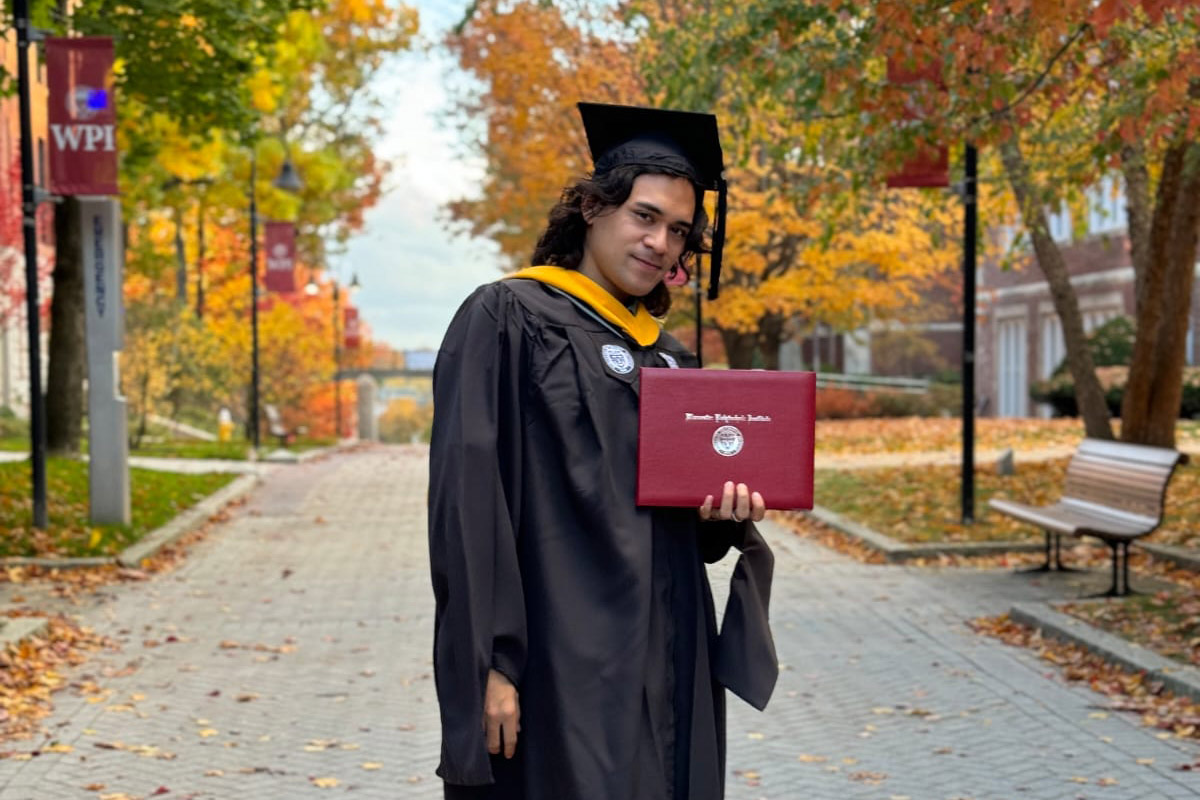
A recent graduate of the Worcester Polytechnic Institute (WPI) in Boston, Massachusetts, Jonathan is one of a handful of Samoans to have been selected for a Fulbright Foreign Student Exchange scholarship programme.
He returned home just a few months ago with an MSc in Community Climate Adaptation – a far cry from his initial goal of studying medicine. “I always just loved Biology,” he told me, before we got distracted by the tangent of the recently ended elections in our country. We have that in common too: both our maternal grandfathers had been Members of Parliament – his in Samoa, and mine in Papua New Guinea.
As we ordered a second round of coffee, I noticed the green symmetrical markings across Jonathan’s knees. He wears a mālōfie, the traditional Samoan tattoo (also called pe’a) that men receive as a mark of readiness for service to their families and communities. The tattooing process is mentally challenging and physically excruciating. A practice that defied even colonial restrictions, tā tatau involves the quick tapping of dark lama ink, sourced from husked candlenut, into the middle and lower back, buttocks, thighs, and navel of the recipient. It takes several days, weeks or sometimes even months to complete, and giving up halfway through the process brings an almost permanent stigma upon the recipient, their family and even their village. When I asked Jonathan how he endured, he simply said, “my mālōfie is a love letter. It is for my grandfather, my family, and my people.” A love letter written in blood and flesh, and from which there is no going back. We spoke then of the Samoan word alofa, which is translated to the English word ‘love,’ but which itself is far more broad, inclusive, and self-sacrificing.
Our Talanoa drifted from tattoos to language; we both agreed that the words we use- particularly when translating English into Gagana Samoa, have tremendous power to either reframe or reproduce harmful narratives and stereotypes around people and places. We reminisced on the importance of Pacific youth knowing their languages- I wanted to use the word ‘indigenous’ here, but Jonathan countered gently that it is a term that has many meanings and is reaching the point of overuse. We moved then to thinking about responsibility, and how knowing culture and language are important baselines for those of us who wish to represent our people in international spaces. We agreed, too, that you do not have to be perfect, but you must make the effort to learn.
Jonathan shared about his undergraduate journey, having received a scholarship to study a Bachelor of Science degree in Biology at the Harbin Normal University in Harbin, China. He was adamant that while a good education is important, it is never definitive of your value as a person. When we base our respect and acceptance for our people on what they achieve, we put them on an impossibly high pedestal and miss the chance to truly know or love them.

At just 27, Jonathan already holds a chiefly title, ‘Letoa’ from his extended family in the village of Fusi, on Savaii Island. It is a weight that he does not carry lightly; we talked about ‘tautua’– that beautiful but sometimes vague word that denotes service, loyalty and responsibility. We considered the fact that there are different types of ‘tautua,’ and that Samoan youth are raised to ‘owe’ tautua to a broad network of ‘places,’ from the church to the village, to the extended family, and of course the country. The question we pondered on the longest was, where does tautua go first? Jonathan shared that he feels we are indebted to our families first; service begins here and branches out. We spoke then of national and international tautua, particularly in the youth empowerment space. We agreed that sometimes the loudest statement you can make is to give your seat and microphone to someone else. Tautua is a delicate balance of stepping forward and knowing when to step back.
As the afternoon ended, we tried to reconcile with the fact that we are just a small part of the transformation we want for the Pacific; there will not in our lifetime ever be ‘too many’ youth changemakers. Jonathan has recently joined the World Economic Forum Global Shapers Hub, and like many young Samoans, is eager to see how international partnerships can amplify the amazing potential that already exists.
Many young, high-achieving Samoans have memories of this: our ancestors came to the township, decades ago, seeking that fairytale better life that was advertised on the colonial radio stations. Whether they got that, the exact dream, I cannot say, but as Jonathan and I said goodbye – I, a Commonwealth Scholar, and he a Fulbright Alumni – I knew that at the very least, their journey was worth it. And the legacy of alofa and tautua continues.