Why Anthropologists Matter in the Fight Against Climate-Driven Disasters
December 14by Riya Mehta
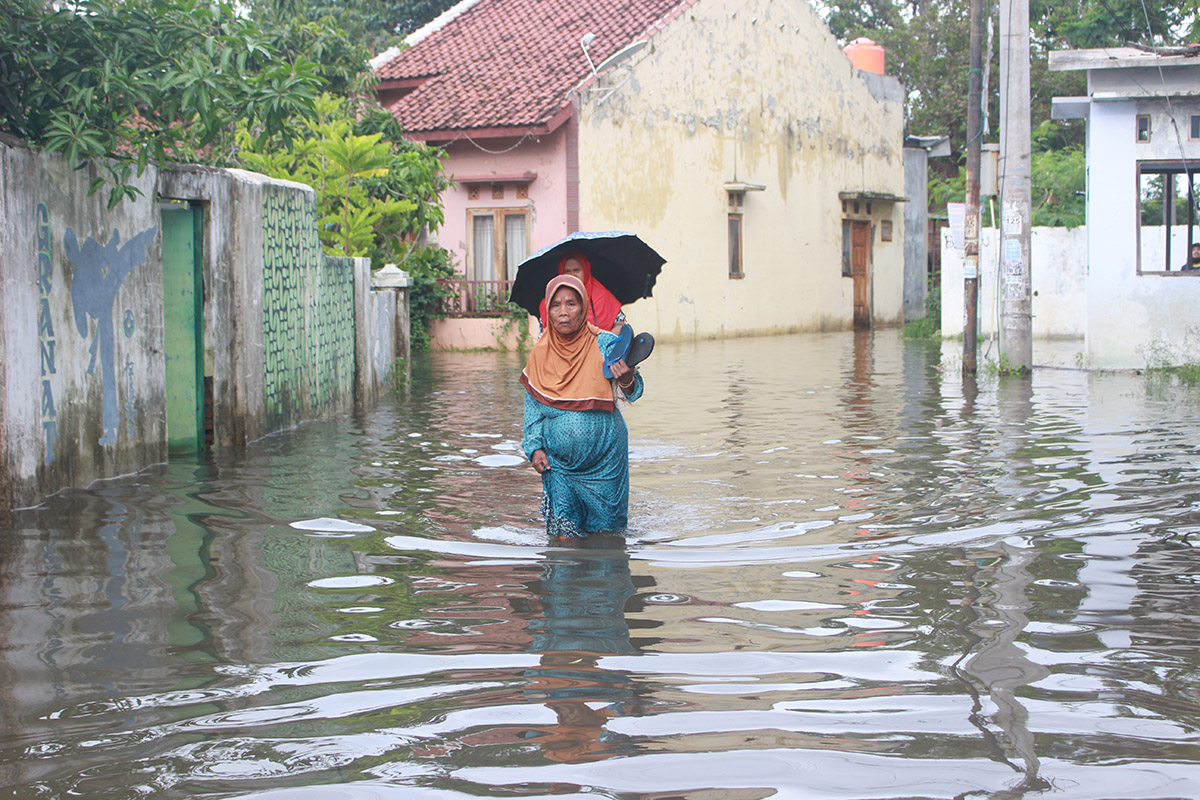
Climate change is speeding up faster than anyone expected, and with it come stronger hurricanes, bigger floods, more wildfires, and disasters that shake communities across the world. For decades, disaster response was led by engineers, climate scientists, and emergency managers who used highly technical, one-dimensional approaches that framed disasters as isolated physical events. But climate vulnerability is shaped by deeper forces – history, culture, politics, and social systems that determine who is most at risk.
That’s where anthropologists step in.
Anthropologists study people and culture, and in the climate disaster world, they help reveal that crises don’t just “happen”. They’re shaped over time by human-environment interactions and made worse when power and resources aren’t equally distributed.
Rather than waiting for disasters and reacting, anthropologists push for proactive climate adaptation that actually builds community resilience.
Today’s disaster response ecosystem includes global frameworks like the Sendai Framework for Disaster Risk Reduction and the Paris Agreement, along with UN agencies, nonprofits, and local organizations. Even with these systems in place, climate disasters still cause tremendous economic damage and long-term trauma – especially for vulnerable communities. For example, Small Island Developing States contribute less than 1 per cent of global emissions but face the worst consequences.
For years, disaster management was dominated by top-down, technocratic strategies. But as social factors, like inequality, housing insecurity, and political power, become impossible to ignore, anthropologists are helping re-center disaster response around people.
They serve as cultural translators, community facilitators, and policy advocates. They use tools like ethnography, participant observation, and kinship mapping to understand what’s actually happening on the ground, not what policymakers assume. Their work reveals why some evacuations fail, why one neighbourhood is devastated while another stays intact, and how certain aid programs unintentionally harm local support systems.
Two powerful examples show how transformative this work can be:
Hurricane Katrina: Culture Ignored
After Hurricane Katrina, anthropologist Katherine Browne spent eight years working with a 155-member Louisiana family. She discovered that much of their instability was made
worse by recovery systems that didn’t understand their cultural reality. Aid programs prioritized nuclear families, ignoring the extended communal living structure central to their resilience. Browne’s immersive, long-term fieldwork highlighted “invisible damages” such as mental-health struggles and fractured support networks – insights that helped encourage agencies like FEMA to rethink how they support real families.
Haiti’s Earthquake: A Second Disaster
After the 2010 Haiti earthquake, anthropologist Mark Schuller found that the flood of international aid created a second crisis. Resources were centralized in Port-au-Prince, leaving rural areas with minimal support. Through interviews across camps, NGOs, and government offices, Schuller revealed how unequal power dynamics shaped the response and advocated for localized aid that puts Haitian communities at the center of decision-making.
Both cases prove a simple truth: there’s no such thing as a purely “natural” disaster. Every disaster is social, cultural, and political, and the people closest to it often hold the knowledge needed for recovery.
Anthropologists help amplify those voices, challenge harmful systems, and humanize a climate crisis that too often gets reduced to data points.