Nairobi Has a Flood Plan. The Rain Will Decide If It Works.
October 6Joyce Wachau Chege
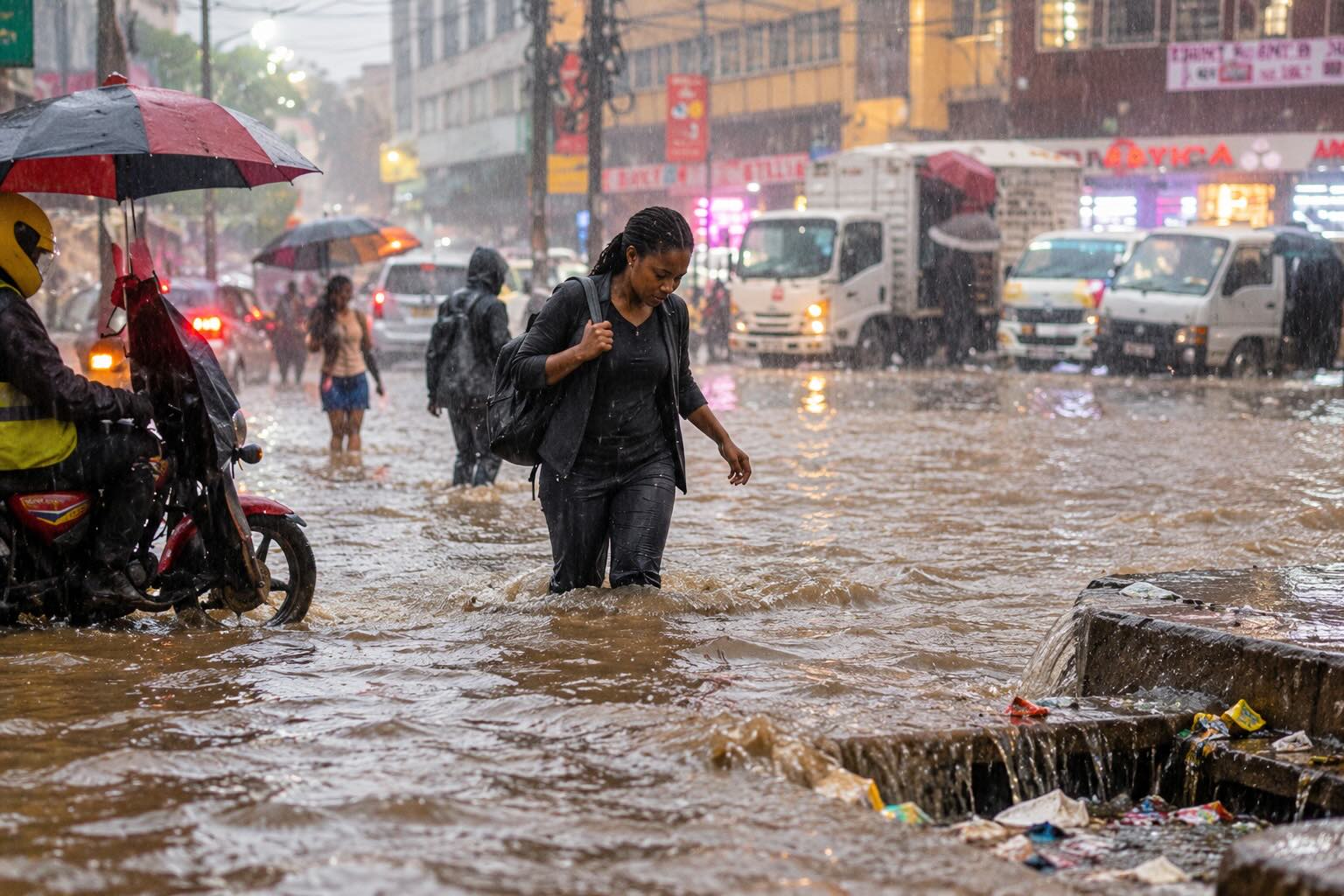
I still have the text I sent my mother at 12:32 am on the 7th of March: “Nimefika sahi” translated to “just got here now.” Two words, sent after nearly eight hours standing in a doorway in town, watching six people fall into potholes. I still remember the smell of sewage in the floodwater I eventually had to wade through, knee-deep, to get to a bus.
Six months on, it turns out he’s found an answer. It comes with a price tag: Ksh2.4 billion.
The Kenya Meteorological Department is now putting an 81 per cent probability on a very strong El Niño developing this year, with a 97 per cent chance its effects persist into early 2027. Forecasters keep reaching for the same two reference points to explain the scale of what’s coming: 1997 and 2023, two years associated with exceptionally heavy rainfall and flooding in Kenya. The Kenya Red Cross says 46 of Kenya’s 47 counties are at risk, with more than two million people potentially affected. Nairobi’s own worst-case planning scenario puts up to 100,000 people at risk. is this now okay?
And this time, unlike March, Nairobi County says it’s ready. Sakaja has committed Ksh2.4 billion to a flood resilience programme, with Ksh2 billion earmarked specifically for drainage and mitigation work across 19 flood-prone roads. County teams say they’ve mapped 246 flood-prone hotspots across all 17 sub-counties.
I read all of this and I want to believe it. I really do. I want to believe that “a lot of what we are removing from the drains is garbage that has been dumped,” as he put it during his August tour, means the drains are actually clear now not just clear for the cameras that came to film him clearing them.
But I was standing in that water in March. I know what “we’re on it” sounds like from a government that has said it before.
Here is what I keep circling back to: if 246 flood hotspots have genuinely existed across Nairobi long enough to be mapped, catalogued, and assigned to sub-committees, that means the county has known, in granular detail, exactly where this city floods. They knew while I was standing in a doorway watching people fall into holes in a road that has “always” been dangerous, according to the very women who were screaming warnings at strangers that night. The infrastructure gaps that nearly drowned me weren’t a surprise to anyone in a position to fix them. They were simply not urgent enough to fix until a forecast with an 81 per cent probability attached to it made ignoring them politically costly.
That is the tension this moment sits inside. Ksh2.4 billion is not a small number, and 1,500 truckloads of waste is not nothing. But money committed in August, before the rain has fallen even once, is a promise. My March night was not hypothetical. It happened. The potholes were real, the water was real, the six people who fell were real, and so was the government’s silence in the weeks after, right up until a governor was asked a direct question on live television.
So, this is what I want him, and every county leader now scrambling to announce preparedness plans before October, to actually be held to: not the announcement, but the follow-through. Not the photo of him inspecting a drain in a hard hat, but whether that drain is still clear in November, in December, in the middle of the worst week of rain this El Niño brings. Not the Ksh2.4 billion figure quoted, but proof that it reached the nineteen roads it was promised to, and not somewhere else entirely by the time the rains actually test it.
Because here is the thing about a forecast with a 97 per cent probability attached to it: it doesn’t leave room for the excuse that came so easily in March that nobody could have known, that the rain simply came too hard, too fast, too unexpectedly. Everybody knows now. It’s been said on national TV stations and in newspapers. The only question this October will actually answer is whether “knowing” and “preparing” turned out to mean the same thing in Nairobi, or whether they were, once again, two very different things wearing the same face.
I hope I’m wrong to be this skeptical. I hope October comes and goes and nobody I know has to send a text like the one I sent my mother at 12:32 am. But hope was not enough to keep me dry in March, and it will not be enough now. What will actually matter is whether the drains hold, not whether the plan sounded good in August.