The Silent Pain of the Boy Child
May 21by Hannah Kumadi Wakawa
I love boys in the same way I love my younger brother. In the way that makes me pause when I see little boys roaming the streets barefoot, laughing loudly despite looking like life has already introduced them to suffering far too early. I love boys enough to wonder what their futures will look like. Enough to wonder if anybody is paying attention to the fact that many of them are growing up emotionally abandoned long before they become men.
Lately, I have found myself thinking about the boy child more than usual. Maybe because everywhere I turn, I see conversations about raising stronger girls, protecting women, empowering daughters. And those conversations matter deeply. They truly do. But somewhere in the middle of all of that, I fear we are forgetting that boys are children too. Forgetting that they also need gentleness, reassurance, softness, and grace.
We speak so much about masculinity that sometimes I wonder if boys even get the chance to discover themselves before the world begins shaping them into men.
A boy falls down and cries, and almost immediately someone tells him to stop crying “like a girl.” A little boy expresses fear, and people laugh. Somewhere along the way, we decided that emotional strength in boys meant emotional silence.
Recently, I heard a mother respond to her overwhelmed son by saying, “What do you want me to do, Jayden?” Maybe she was exhausted. Parenting is not easy. But I could not stop thinking about the little boy’s withdrawal afterward. And I wondered how many boys experience moments like that repeatedly until they finally stop talking altogether.
Girls are often allowed emotional expression in ways boys are not. A girl can cry publicly and still be comforted. She can speak about anxiety, heartbreak, fear, or confusion and people gather around her with concern. But boys are rarely afforded the same grace.
At eleven, many boys are already told to “be a man.” At thirteen, they learn to suppress tears. At fifteen, vulnerability becomes shameful. We teach boys very early that softness is dangerous, and then we act surprised when they grow into emotionally distant men who struggle to communicate affection.
Sometimes I think society only loves boys when they are useful — when they are providers, protectors, performers. But very few people stop to ask who protects the boy before he becomes the man everyone depends on.
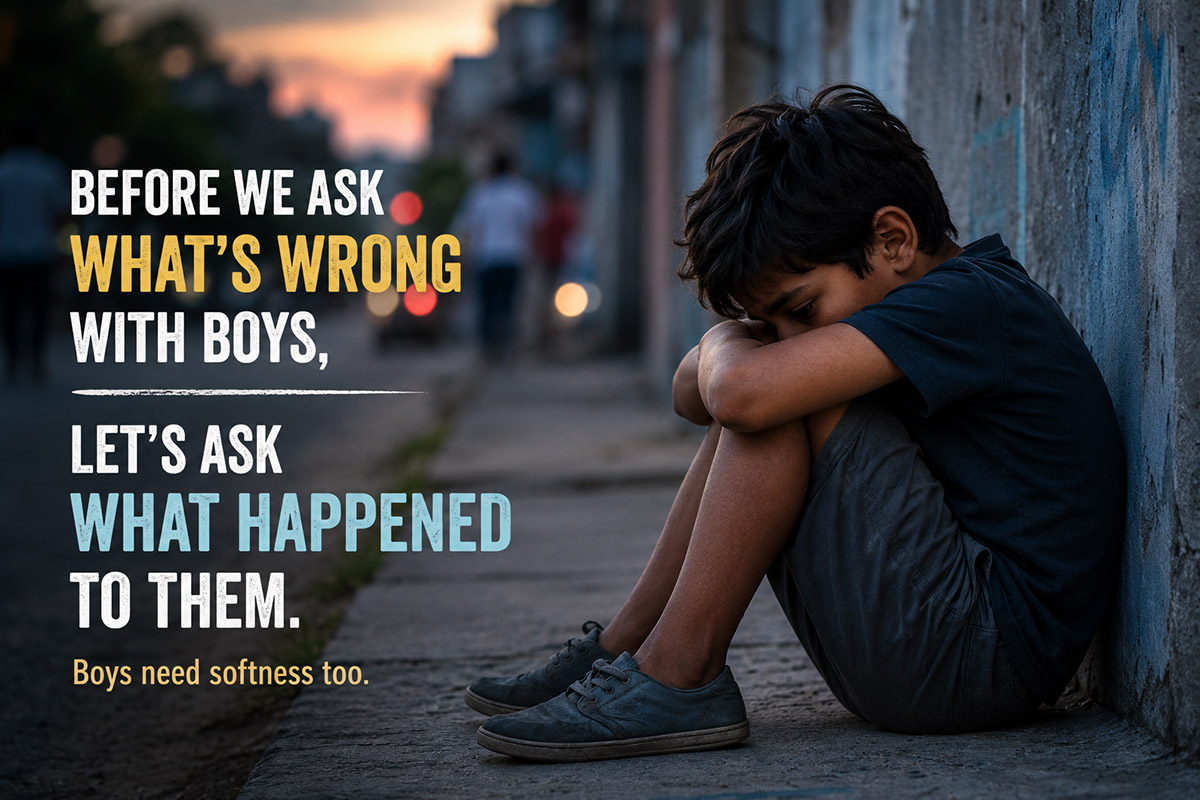
Last week, a boy no older than thirteen was found sleeping inside a parked car. While people gathered around discussing what danger he might pose, I found myself asking a different question: what happened to him? What circumstances lead a child to sleep alone in a stranger’s car? What kind of exhaustion must sit inside a thirteen-year-old for the inside of a parked vehicle to feel safer than home?
But nobody seemed interested in that part.
The conversations around him were filled with suspicion instead of compassion. Some people assumed he was trying to steal. Others insisted boys his age were becoming “criminals these days.” Very few people paused long enough to remember that he was still a child.
And maybe that is the problem. We stop seeing boys as children far too early.
A tired little girl sleeping somewhere unusual would likely trigger immediate concern and protection. But a boy in the same situation is often treated first as a potential threat before he is treated as someone who might need help. We approach boys with caution before empathy, and I fear we are creating generations of boys who grow up believing nobody truly cares about their pain unless they package it in silence.
The truth is, neglected boys do not simply disappear. Their pain goes somewhere. Sometimes it becomes anger. Sometimes violence. Sometimes addiction. Sometimes emotional numbness so deep that even love struggles to reach them.
And then society turns around years later and asks, “What happened to men?”
But men do not appear from nowhere. They were once boys. Boys who were told not to cry. Boys who learned that asking for help made people uncomfortable. Boys who were mocked for softness and taught that vulnerability was shameful.
This conversation is not about placing boys above girls. It is not a competition between whose suffering matters more. Girls deserve protection, opportunity, education, and safety. Absolutely. But caring for girls should never require emotionally abandoning boys. Compassion cannot flow in only one direction.
A society functions properly when all its children are cared for. You cannot intentionally nurture one side while emotionally starving the other and expect balance later.
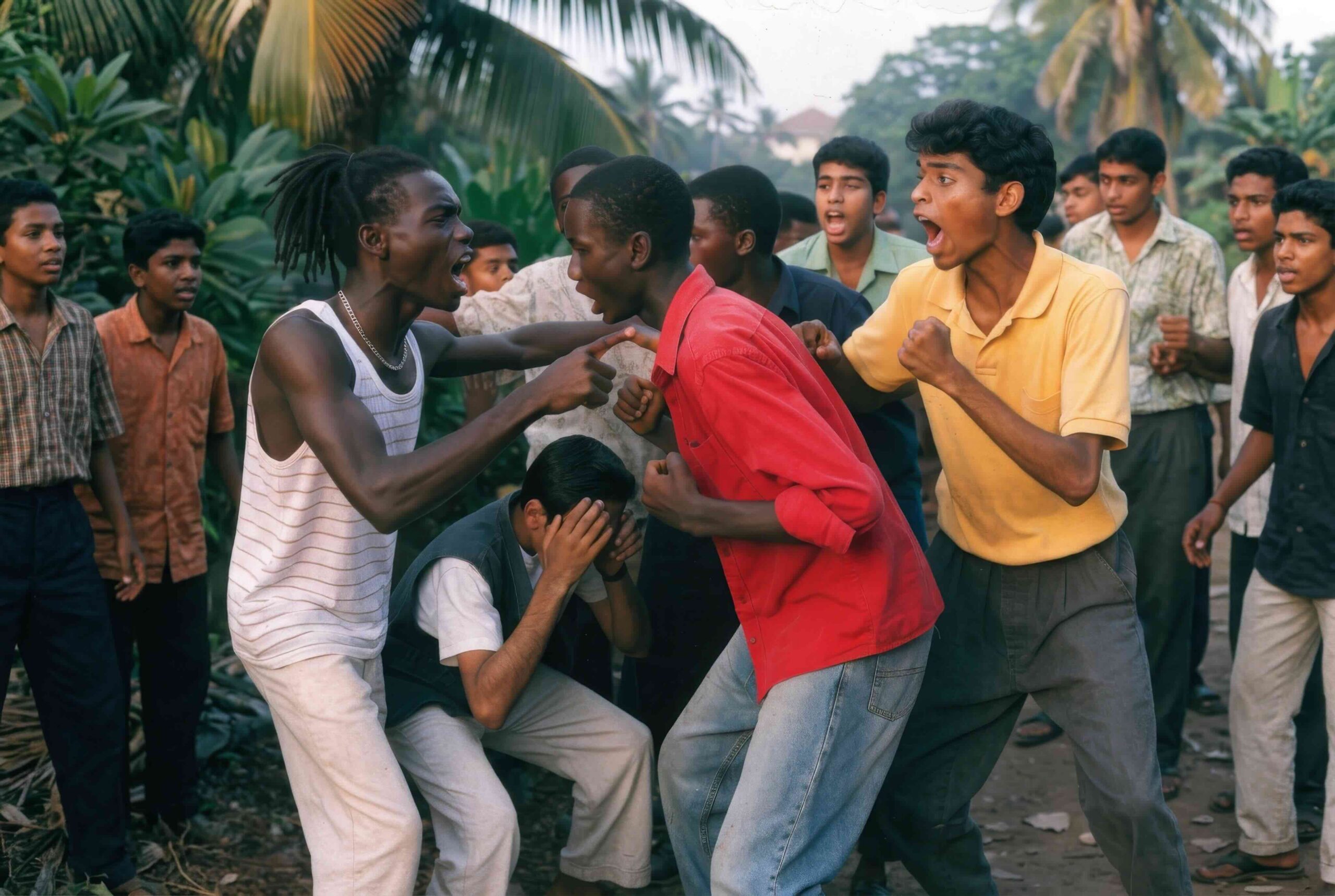
I think about the boys who joke too much because humour is the only acceptable form of vulnerability they have been allowed. The teenage boys who become aggressive because anger is the only emotion society permits them to express loudly. The boys who secretly want comfort but pretend they do not need it because they have learned that needing people makes them weak.
And I wonder what kind of men they would become if they were loved more gently.
What would happen if we taught boys that emotional honesty is not weakness? What if we allowed them to be afraid sometimes without mocking them? What if we listened instead of immediately correcting?
Maybe then we would raise men who know how to communicate instead of suppress. Men who do not equate dominance with masculinity. Men who become emotionally present fathers because someone once taught them that tenderness is not shameful.
I love boys because beneath all the expectations society throws onto them, many of them are still just children trying to survive quietly. Children carrying burdens too heavy for their age. Children pretending not to need comfort because the world has convinced them that softness makes them less worthy of respect.
And perhaps the saddest thing of all is that many boys learn to suffer silently so well that by the time anybody notices something is wrong, the damage has already settled deep inside them.
Maybe what boys need is not endless lectures about becoming men. Maybe what they need is empathy, compassion, and the freedom to simply be boys while they still can.
What if we gave the boy child the opportunity to say:
“I’m just a boy.”