CultureEducation
Home Our latest stories CultureEducationFeatureFestivals and Traditions The Hamlets of Rajwadi: An Excursion through Konkan Villages

The Hamlets of Rajwadi: An Excursion through Konkan Villages

May 31st, 2026

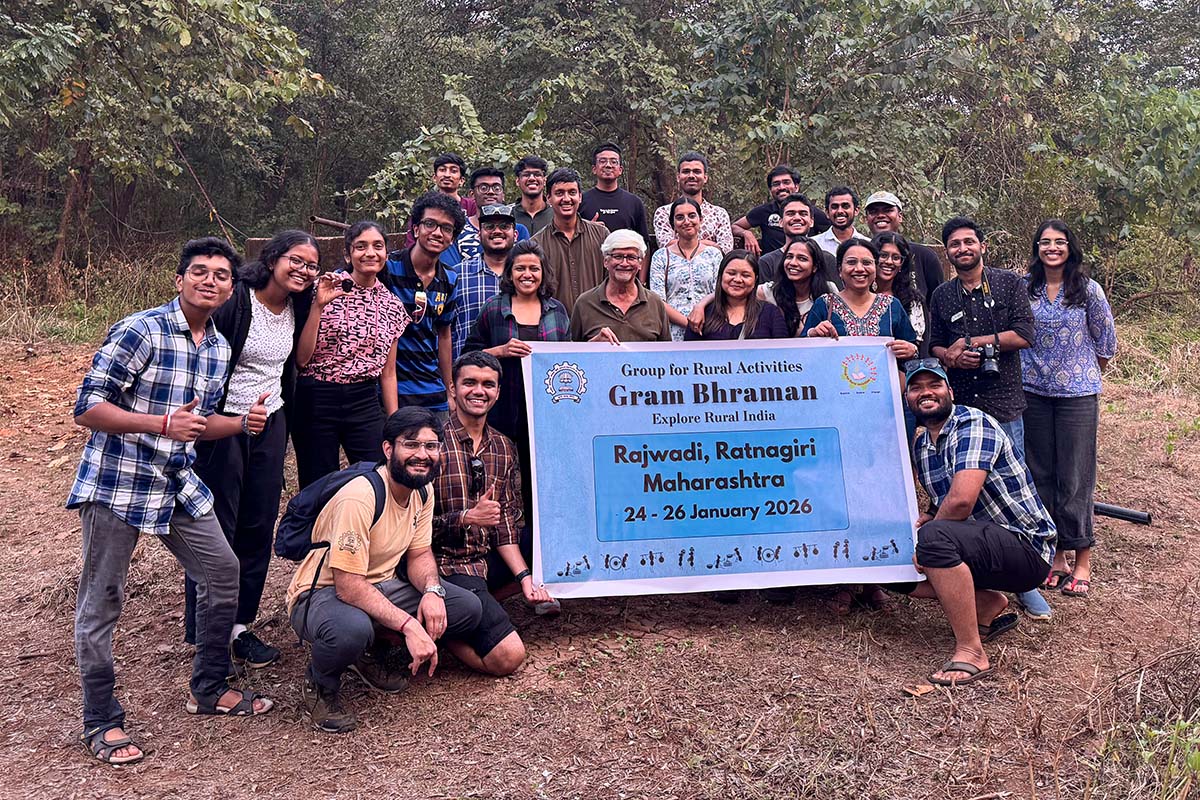
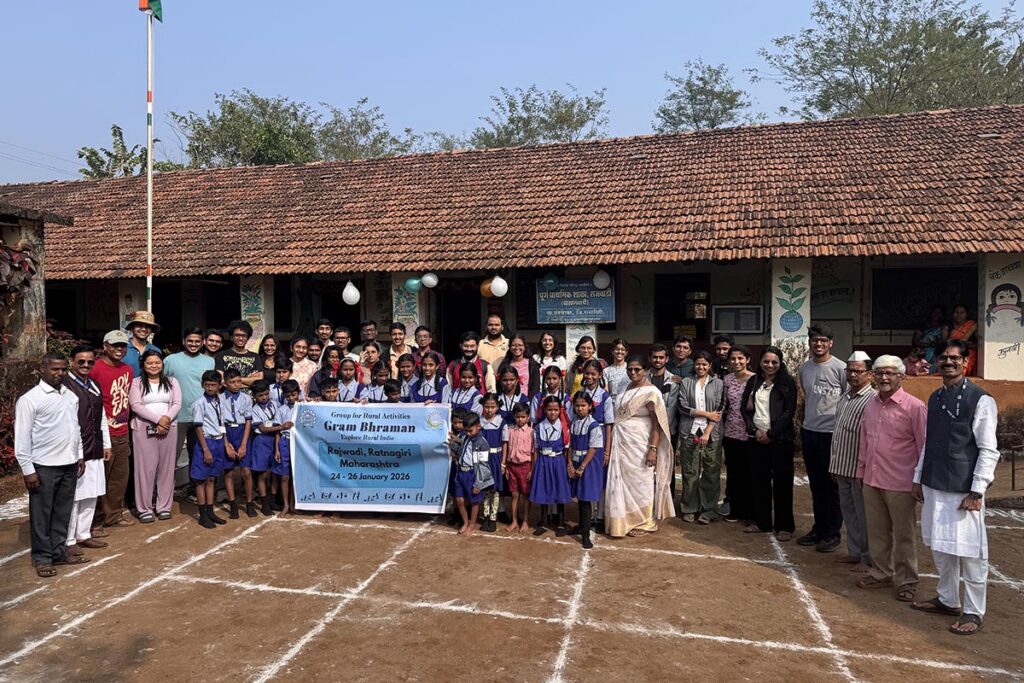
A group of 29 students from the Group of Rural Activities (GRA) club from Indian Institute of Technology (IIT) Bombay embarked on a three-day rural immersion camp to the scenic Konkan region. Departing the campus at 4:00 am on January 24, 2026, we reached Rajwadi village at 11:00 am after a seven-hour journey. We were warmly received by our host, Satish Sir, who conducted an essential orientation and briefing session. This introduction provided us with critical insights into Rajwadi’s unique geographical and ecological landscape while outlining the strategic objectives for our three-day field study.

Nestled in the Ratnagiri district of Maharashtra, Rajwadi is not a single large village but a collection of seven to eight intimate hamlets, each home to 25–30 families. This layout reflects the traditional geography of the Konkan coast, where rugged hills and limited flat land prevent the formation of massive settlements. Despite its traditional structure, Rajwadi is well-connected; it lies 46 km from the district headquarters and is accessible from Mumbai (246 km away) via the scenic Mumbai-Goa National Highway 66.
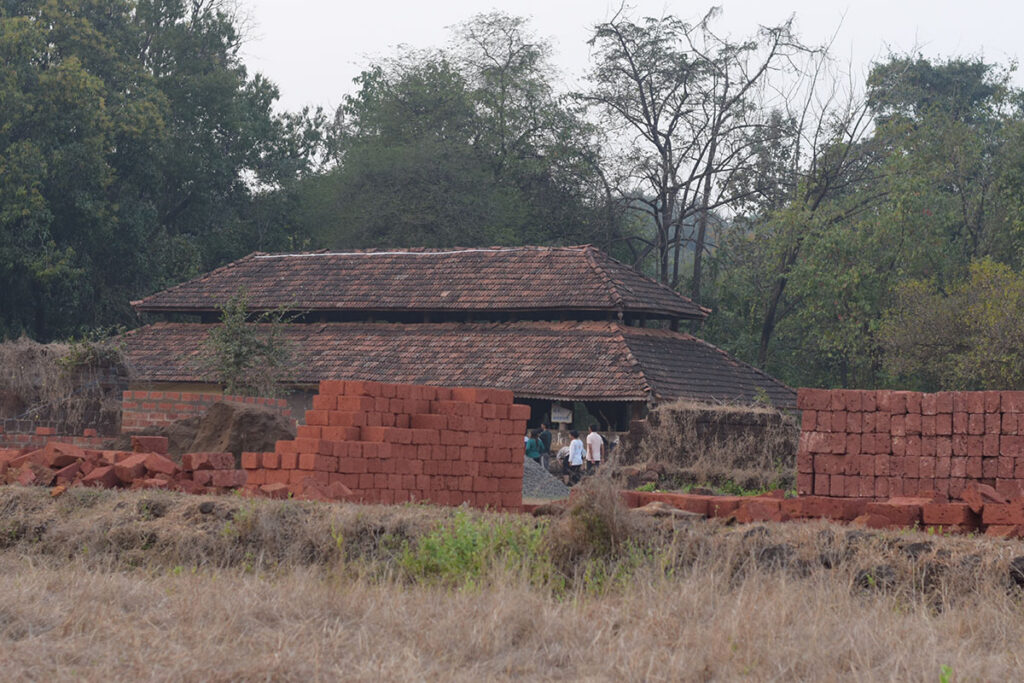
Rajwadi

Satish Kamat was our host for this camp. After a career as a professional journalist in Pune, he chose to return to Rajwadi (his native place). Despite not being in any official position, his presence is well present within the people of Rajwadi due to his contributions toward the village. He directed CSR (Corporate Social Responsibility) from the Bansuri foundation to his village to drive local development.
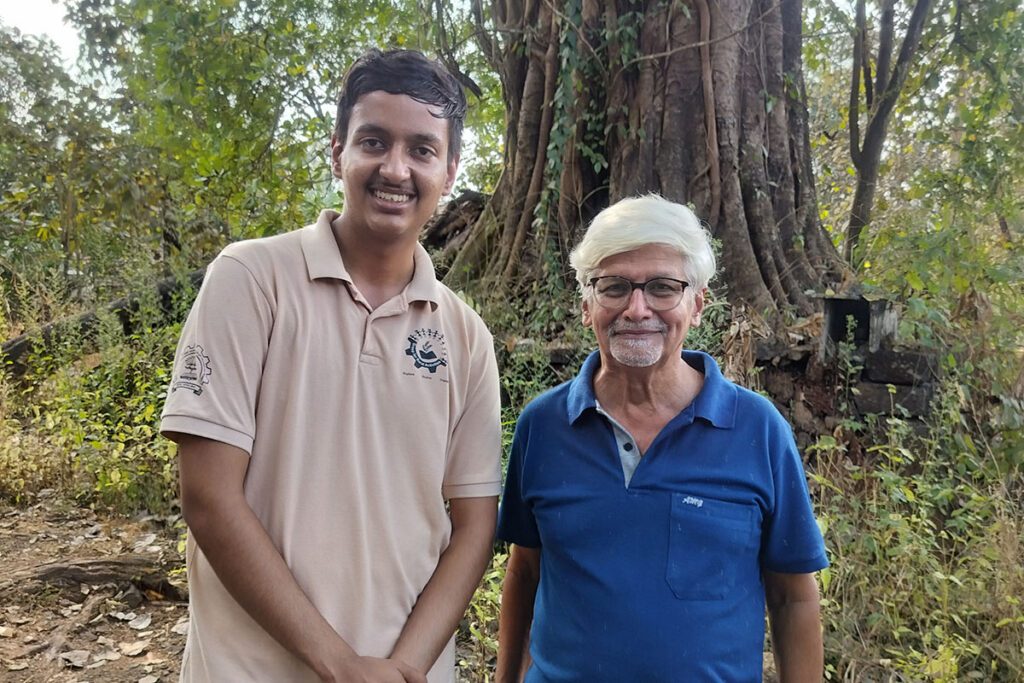
Host Satish Kamat (right) with one of the students

A notable example of this was his success in establishing a reliable drinking water system by mobilizing villagers to participate in Shramdaan (voluntary community labour). Satish Sir  strongly believes that villagers should have some investment into any project since that develops a sense of responsibility which ensures the project’s long-term maintenance. This commitment is often missing in 100 per cent externally funded initiatives.

During our field visit, we first engaged with two local dairy farmers who manage a small-scale dairy operation with about  eight to 10 cows together. We observed that success in dairy farming demands high levels of dedication and a strategic approach to livestock management. To maintain a consistent income stream, a minimum of three cows is often necessary; this accounts for the natural lactation cycles where milk yield decreases during the gestation period. By using multiple cattle, the farmer ensures a steady daily production—in this case, approximately  six to eight litres per cow.
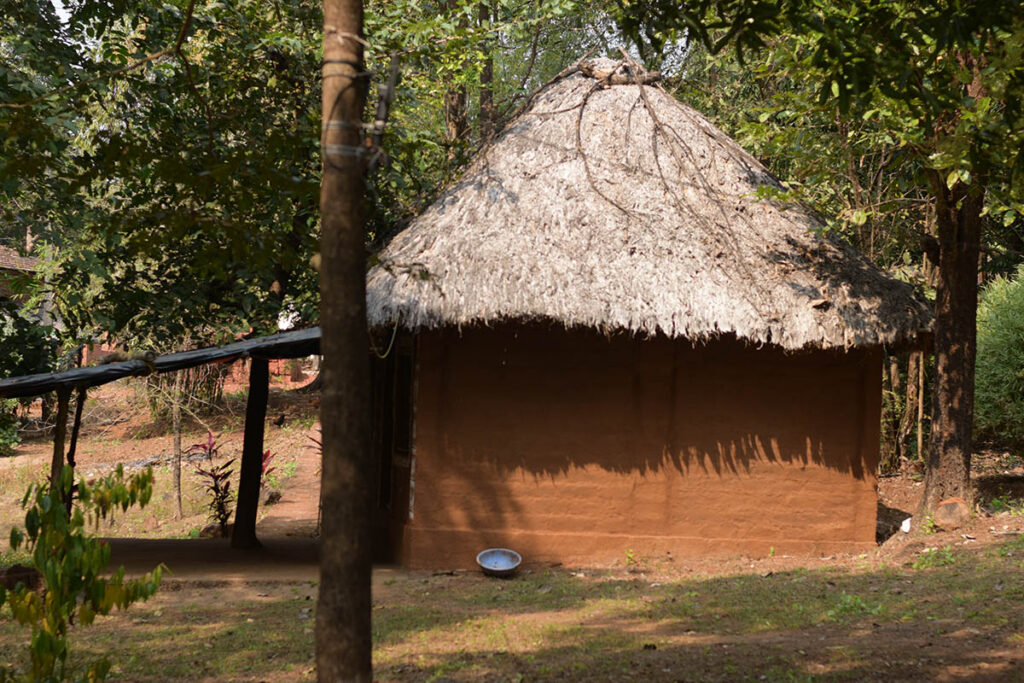
Beyond traditional farming, poultry and goat-rearing have emerged as vital pillars of income diversification in Rajwadi. The poultry unit we visited, managed by a resilient woman who has successfully moved past the physical challenges of Polio, serves as a powerful model of social and economic empowerment. With a flock of hens producing eggs on alternate days, the venture generates approximately ₹7500 per month. Similarly, goat-rearing offers a high-value, but physically demanding, livelihood. Managing a herd of 30 goats requires significant effort, including daily grazing treks and protection against local predators like leopards and bears. However, the profitability is substantial, as a single mature goat can fetch between ₹13,000 and ₹15,000 in the market.

The evening session began with a round table discussion with a Women’s Self-Help Group (SHG) representing several nearby hamlets. The primary concern raised was the high rate of migration to major urban centers like Mumbai and Pune. While families move in search of better livelihoods and higher standards of living, this “brain drain” has left the village with a missing middle generation. Consequently, the burden of physical labor and village upkeep falls almost entirely on the elderly.
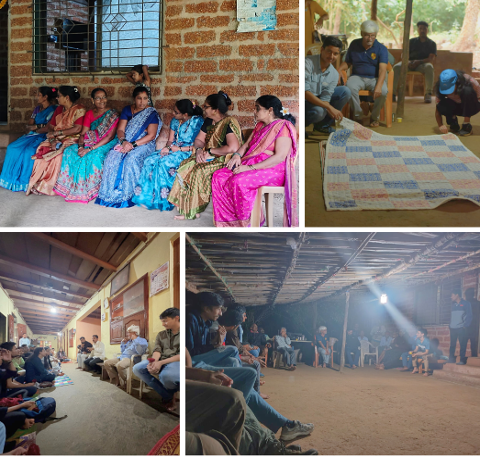
(Clockwise from top): Women members of SHG; A handmade cotton blanket by woman from SHG; discussion with villagers; discussions with previous village sarpanch

We visited Bhavangad Fort, which was built by Chhatrapati Shivaji Maharaj. Since it is located on a high peak, it was used as a lookout post to spot enemy movement in the surrounding areas. One of the most interesting things we found was an underground water stream just outside the fort. Satish sir explained that this is a special feature of Shivaji Maharaj’s forts. They were designed to extract water through the natural underground water streams found in the Konkan region. The water extracted from these streams is fit for drinking.

Mehak remarks: “My Rajwadi trip was a perfect mix of fun and learning. Experiencing the hot water springs and a vibrant village wedding were definite highlights, but the best part was bonding with the GRA team and fellow students. It truly made the whole experience more meaningful and memorable.”
Following our trek to Bhavangad Fort, we were warmly invited to a traditional Konkani wedding in a nearby hamlet. We observed several distinct rituals, including the bride’s brother carrying her to the mandap, the presentation of handmade gifts, and separate prayer ceremonies conducted for the bride and groom just before the marriage. The most inspiring aspect of the event was the community’s participation in successfully conducting the event. Right from distributing invitation cards to putting Mandapam for the wedding and serving food to guests, all men and women of the hamlet share responsibilities in a very planned manner.

Mythili, a BS Economics 3rd year student from IIT Bombay reminisced ,“The whole trip was very rich in culture from the local food served in brahmanwadi (special mention: bhakri) to the  konkani wedding we got to attend. Like every other village, this one had its own specialities which they identified and built an eco-tourism project with. There are very few examples out there of communities with such collective responsibility where they work out their own problems with little to no need of government intervention, and this stands as one with the support of Satish Kamat sir giving a whole new perspective to solving on ground issues that differ village to village.”

In the evening, we observed the irrigation infrastructure in Rajwadi. To solve this issue, the villagers first built a small check dam to maintain a consistent water level of about 5–6 feet and control the stream’s flow. They then installed a submersible pump and a network of pipes to move water uphill to the fields. This new system has been a game-changer for local farmers, as it allows them to irrigate their crops during the Rabi season and the dry summer months when there is no rainfall.
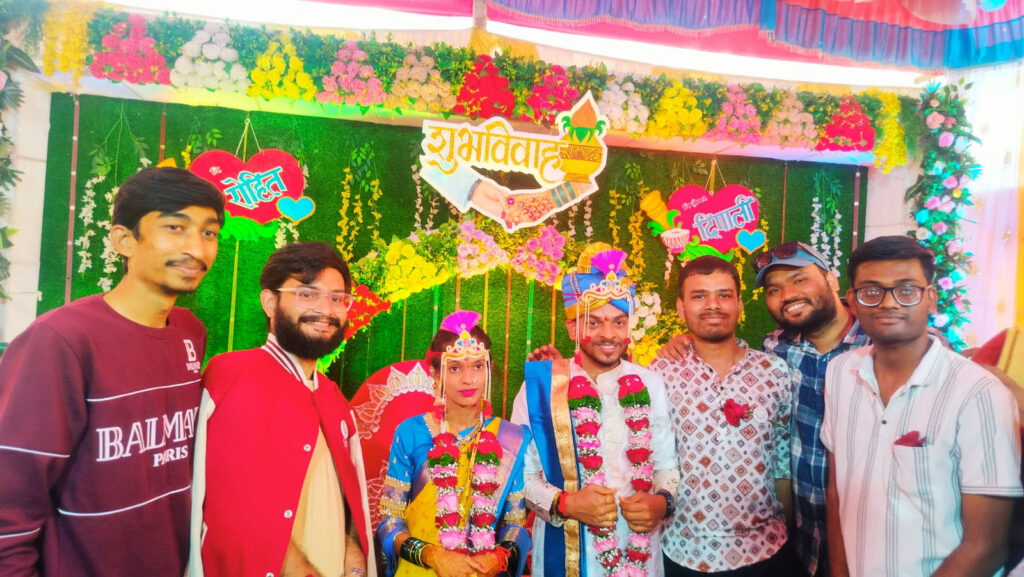
Konkani wedding ceremony

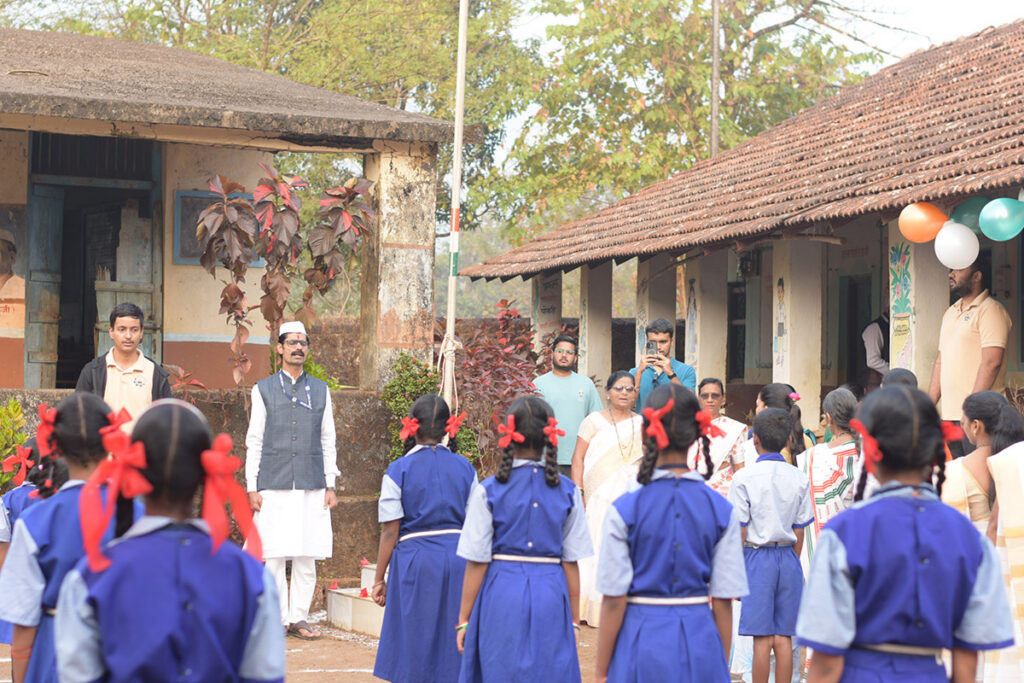
The final day was designed to integrate Republic Day celebration with practical agricultural study. We participated in the Republic Day ceremony at the local school and had interaction with children and teachers to understand education and migration issues. The 77th Republic Day celebration at the local Zila Parishad school was the highlight of our final day. Subsequent interactions with the teachers and students provided profound insights into the state of rural education. A striking observation was that the school serves only 20 children across various age groups.

Migration from the village is not aspirational; it is forced by structural inadequacies. Economic migration arises not due to laziness or disinterest in farming, but due to lack of diversified livelihood options. Migration thus becomes a survival strategy. However, migration here is partial and reversible, not permanent severance. During culturally significant periods such as Shinga (Holi) and Ganesh Festival, the village becomes fully alive again. Houses reopen, rituals resume, and social bonds are renewed.

“The visit to Rajwadi, helped me understand the life of hamlets in Konkan villages. I understood the micro economies of tourism, agriculture, dairy poultry and handicrafts that existed and how they were supported by external funding and self-help groups. I also saw the looming challenges created by migration of labour from villages to cities and how the villages were trying to create incentives for people to stay back,” Durvesh, an MBA final year student from IIT Bombay noted.
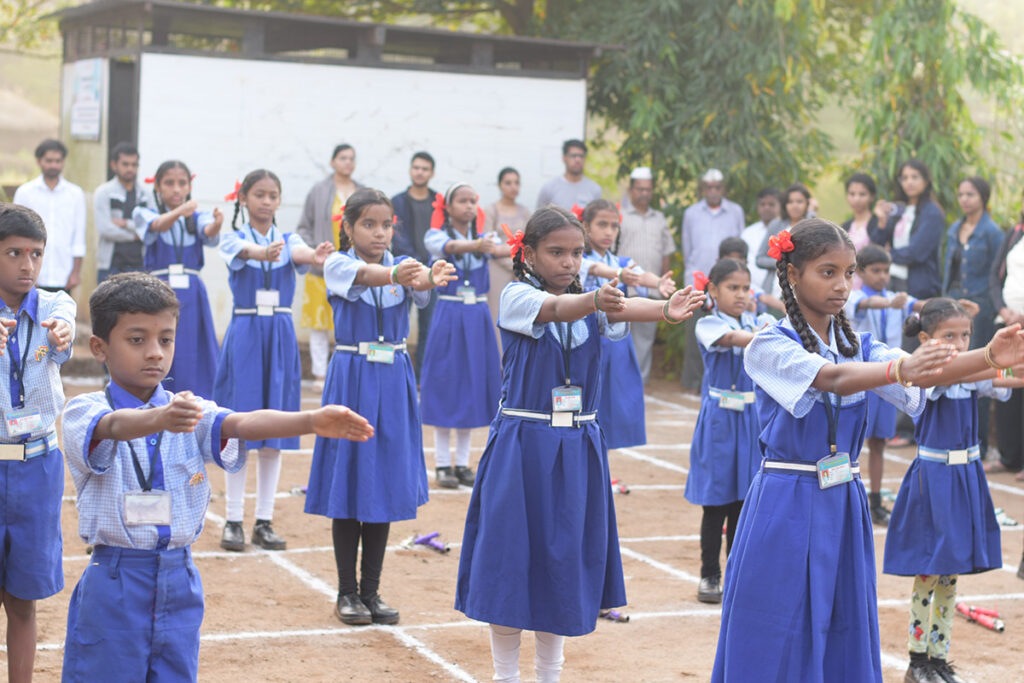
GRA at Zila Parishad school Rajwadi
77th Republic day celebration at Zila Parishad schoo

Trust functions as the village’s most valuable resource. It allows financial contributions without suspicion, volunteer labour, and leadership without enforcement. This trust is not instant; it is built through years of shared work, shared failures, and shared responsibilities. Leadership in this context is not positional. It emerges slowly through consistent participation, trustworthiness, and accountability. Authority is earned, not assigned.

Overall Coordinator of GRA, Archishman Ray sums up, “Remembering our visit, it feels very refreshing to realize how many different dimensions of Rajwadi we got to witness in the three days. We explored Historic Forts, Hot Water Springs and Ancient Temples which attract Curious visitors. We looked at animal rearing, poultry, micro farm agriculture, dairy facilities, which support local livelihood. We enjoyed a feast at a local wedding through a surprise invite and got to participate in the celebrations organized by all villagers coming together to contribute. We celebrated Republic Day with the schoolchildren who were cheerful with patriotic displays. We also learnt about distress migration being a common threat for the community as the younger populations migrate to cities, leaving the vulnerable behind. Satish sir’s Water irrigation project inspired many of us as to how problems can be solved through collective efforts like “Shram Daan”. Finally, we also got a taste of Kokum Sharbat to beat the heat.”

Authored by – Pranjal (2nd year B.tech student in Metallurgical Engineering, Material Science, IIT Bombay) &Pratiksha Morankar,1st year student of Master in Design by research (M.Des. by Research) in IDC (Industrial Design Centre), IIT Bombay

Camp membersArchishman Ray, Ajeesh Mohan T, Amit Dubey, Shivam Sinha, Yogesh Jangid, Pranjal, Durvesh Korgaonkar, Manas Kumar, Gaurav Athawale, Pratyush Panda, Ankur Talsaniya, Kadapalla Nithin Kumar, Siva Kumar Dogga, Rohitshav Kumar, Pratik Nimbalwar, Milan Bhujeja, Aswath Sahoo, Tanushree Meena, Aarushi Roy, Ainika Lyngdoh, Pratiksha Morankar, Sakshi, Mehak Kumari, Mahak, Mythili, Anushka Bapat, Chappa Hemani, Surbhi Kumari, Vandana.

Compiled and Submitted by Sameer Kumar Misra

Share

About the author

Sameer Misra

Sameer Misra is a mechanical engineer, a SBI Fellow and the founder of an initiative aimed at providing quality education to the most marginalized communities. He has been setting up labs in remote rural schools of India to provide affordable, practical science education to disadvantaged children. He is the recipient of prestigious awards from NASA and German Aerospace Agency. He has received awards for his education and technology development work in villages of India. His work has been covered in the KindnessMatters series of UNESCO MGIEP (Mahatma Gandhi Institute of Education for Peace and Sustainable Development).

Submit your content

Submit a video
Submit an article

A group of 29 students from the Group of Rural Activities (GRA) club from Indian Institute of Technology (IIT) Bombay embarked on a three-day rural immersion camp to the scenic Konkan region. Departing the campus at 4:00 am on January 24, 2026, we reached Rajwadi village at 11:00 am after a seven-hour journey. We were warmly received by our host, Satish Sir, who conducted an essential orientation and briefing session. This introduction provided us with critical insights into Rajwadi’s unique geographical and ecological landscape while outlining the strategic objectives for our three-day field study.

Nestled in the Ratnagiri district of Maharashtra, Rajwadi is not a single large village but a collection of seven to eight intimate hamlets, each home to 25–30 families. This layout reflects the traditional geography of the Konkan coast, where rugged hills and limited flat land prevent the formation of massive settlements. Despite its traditional structure, Rajwadi is well-connected; it lies 46 km from the district headquarters and is accessible from Mumbai (246 km away) via the scenic Mumbai-Goa National Highway 66.

Rajwadi

Satish Kamat was our host for this camp. After a career as a professional journalist in Pune, he chose to return to Rajwadi (his native place). Despite not being in any official position, his presence is well present within the people of Rajwadi due to his contributions toward the village. He directed CSR (Corporate Social Responsibility) from the Bansuri foundation to his village to drive local development.

Host Satish Kamat (right) with one of the students

A notable example of this was his success in establishing a reliable drinking water system by mobilizing villagers to participate in Shramdaan (voluntary community labour). Satish Sir  strongly believes that villagers should have some investment into any project since that develops a sense of responsibility which ensures the project’s long-term maintenance. This commitment is often missing in 100 per cent externally funded initiatives.

During our field visit, we first engaged with two local dairy farmers who manage a small-scale dairy operation with about  eight to 10 cows together. We observed that success in dairy farming demands high levels of dedication and a strategic approach to livestock management. To maintain a consistent income stream, a minimum of three cows is often necessary; this accounts for the natural lactation cycles where milk yield decreases during the gestation period. By using multiple cattle, the farmer ensures a steady daily production—in this case, approximately  six to eight litres per cow.

Beyond traditional farming, poultry and goat-rearing have emerged as vital pillars of income diversification in Rajwadi. The poultry unit we visited, managed by a resilient woman who has successfully moved past the physical challenges of Polio, serves as a powerful model of social and economic empowerment. With a flock of hens producing eggs on alternate days, the venture generates approximately ₹7500 per month. Similarly, goat-rearing offers a high-value, but physically demanding, livelihood. Managing a herd of 30 goats requires significant effort, including daily grazing treks and protection against local predators like leopards and bears. However, the profitability is substantial, as a single mature goat can fetch between ₹13,000 and ₹15,000 in the market.

The evening session began with a round table discussion with a Women’s Self-Help Group (SHG) representing several nearby hamlets. The primary concern raised was the high rate of migration to major urban centers like Mumbai and Pune. While families move in search of better livelihoods and higher standards of living, this “brain drain” has left the village with a missing middle generation. Consequently, the burden of physical labor and village upkeep falls almost entirely on the elderly.

(Clockwise from top): Women members of SHG; A handmade cotton blanket by woman from SHG; discussion with villagers; discussions with previous village sarpanch

We visited Bhavangad Fort, which was built by Chhatrapati Shivaji Maharaj. Since it is located on a high peak, it was used as a lookout post to spot enemy movement in the surrounding areas. One of the most interesting things we found was an underground water stream just outside the fort. Satish sir explained that this is a special feature of Shivaji Maharaj’s forts. They were designed to extract water through the natural underground water streams found in the Konkan region. The water extracted from these streams is fit for drinking.

Mehak remarks: “My Rajwadi trip was a perfect mix of fun and learning. Experiencing the hot water springs and a vibrant village wedding were definite highlights, but the best part was bonding with the GRA team and fellow students. It truly made the whole experience more meaningful and memorable.”

Following our trek to Bhavangad Fort, we were warmly invited to a traditional Konkani wedding in a nearby hamlet. We observed several distinct rituals, including the bride’s brother carrying her to the mandap, the presentation of handmade gifts, and separate prayer ceremonies conducted for the bride and groom just before the marriage. The most inspiring aspect of the event was the community’s participation in successfully conducting the event. Right from distributing invitation cards to putting Mandapam for the wedding and serving food to guests, all men and women of the hamlet share responsibilities in a very planned manner.

Mythili, a BS Economics 3rd year student from IIT Bombay reminisced ,“The whole trip was very rich in culture from the local food served in brahmanwadi (special mention: bhakri) to the  konkani wedding we got to attend. Like every other village, this one had its own specialities which they identified and built an eco-tourism project with. There are very few examples out there of communities with such collective responsibility where they work out their own problems with little to no need of government intervention, and this stands as one with the support of Satish Kamat sir giving a whole new perspective to solving on ground issues that differ village to village.”

In the evening, we observed the irrigation infrastructure in Rajwadi. To solve this issue, the villagers first built a small check dam to maintain a consistent water level of about 5–6 feet and control the stream’s flow. They then installed a submersible pump and a network of pipes to move water uphill to the fields. This new system has been a game-changer for local farmers, as it allows them to irrigate their crops during the Rabi season and the dry summer months when there is no rainfall.

Konkani wedding ceremony

The final day was designed to integrate Republic Day celebration with practical agricultural study. We participated in the Republic Day ceremony at the local school and had interaction with children and teachers to understand education and migration issues. The 77th Republic Day celebration at the local Zila Parishad school was the highlight of our final day. Subsequent interactions with the teachers and students provided profound insights into the state of rural education. A striking observation was that the school serves only 20 children across various age groups.

Migration from the village is not aspirational; it is forced by structural inadequacies. Economic migration arises not due to laziness or disinterest in farming, but due to lack of diversified livelihood options. Migration thus becomes a survival strategy. However, migration here is partial and reversible, not permanent severance. During culturally significant periods such as Shinga (Holi) and Ganesh Festival, the village becomes fully alive again. Houses reopen, rituals resume, and social bonds are renewed.

“The visit to Rajwadi, helped me understand the life of hamlets in Konkan villages. I understood the micro economies of tourism, agriculture, dairy poultry and handicrafts that existed and how they were supported by external funding and self-help groups. I also saw the looming challenges created by migration of labour from villages to cities and how the villages were trying to create incentives for people to stay back,” Durvesh, an MBA final year student from IIT Bombay noted.

GRA at Zila Parishad school Rajwadi
77th Republic day celebration at Zila Parishad schoo

Trust functions as the village’s most valuable resource. It allows financial contributions without suspicion, volunteer labour, and leadership without enforcement. This trust is not instant; it is built through years of shared work, shared failures, and shared responsibilities. Leadership in this context is not positional. It emerges slowly through consistent participation, trustworthiness, and accountability. Authority is earned, not assigned.

Overall Coordinator of GRA, Archishman Ray sums up, “Remembering our visit, it feels very refreshing to realize how many different dimensions of Rajwadi we got to witness in the three days. We explored Historic Forts, Hot Water Springs and Ancient Temples which attract Curious visitors. We looked at animal rearing, poultry, micro farm agriculture, dairy facilities, which support local livelihood. We enjoyed a feast at a local wedding through a surprise invite and got to participate in the celebrations organized by all villagers coming together to contribute. We celebrated Republic Day with the schoolchildren who were cheerful with patriotic displays. We also learnt about distress migration being a common threat for the community as the younger populations migrate to cities, leaving the vulnerable behind. Satish sir’s Water irrigation project inspired many of us as to how problems can be solved through collective efforts like “Shram Daan”. Finally, we also got a taste of Kokum Sharbat to beat the heat.”

Authored by – Pranjal (2nd year B.tech student in Metallurgical Engineering, Material Science, IIT Bombay) &Pratiksha Morankar,1st year student of Master in Design by research (M.Des. by Research) in IDC (Industrial Design Centre), IIT Bombay

Camp membersArchishman Ray, Ajeesh Mohan T, Amit Dubey, Shivam Sinha, Yogesh Jangid, Pranjal, Durvesh Korgaonkar, Manas Kumar, Gaurav Athawale, Pratyush Panda, Ankur Talsaniya, Kadapalla Nithin Kumar, Siva Kumar Dogga, Rohitshav Kumar, Pratik Nimbalwar, Milan Bhujeja, Aswath Sahoo, Tanushree Meena, Aarushi Roy, Ainika Lyngdoh, Pratiksha Morankar, Sakshi, Mehak Kumari, Mahak, Mythili, Anushka Bapat, Chappa Hemani, Surbhi Kumari, Vandana.

Compiled and Submitted by Sameer Kumar Misra