
Data & InformationEducationEntrepreneurship & EmploymentTechnology

When does Prediction become Surveillance?

July 23rd, 2026

by G Sai Prashanth

I spent the last month researching a number that should worry every young person entering tech: for every 10 advanced AI jobs open in India right now, there is roughly one qualified candidate to fill it (Joshi, 2026). Not because people aren’t trying. India’s tech talent pool grew from around 416,000 to 920,000 professionals between 2024 and 2026 (Deloitte India & Nasscom, 2024). This problem is structural. National audits show fewer than 5 per cent of Indian IT graduates can write working code (India Today, 2026). The system that trained us didn’t keep pace with what the market now demands.

So companies did what companies do: they built better tracking. HR teams in the major tech hubs in India now map employees’ skills in real time. How fast someone learns, who they collaborate with, whose code gets reviewed (Quess Corp, 2025). Some of it is genuinely useful. This can help identify hidden mentors and catch early signs of burnout before someone breaks.
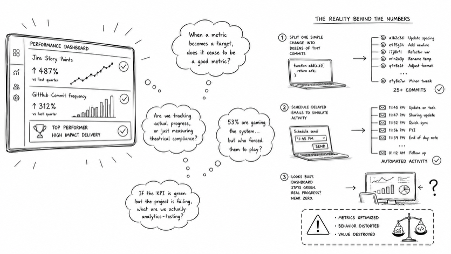
Graphic caption: Figure 1: Goodhart’s Law illustration (Created using Chatgpt Image Model)

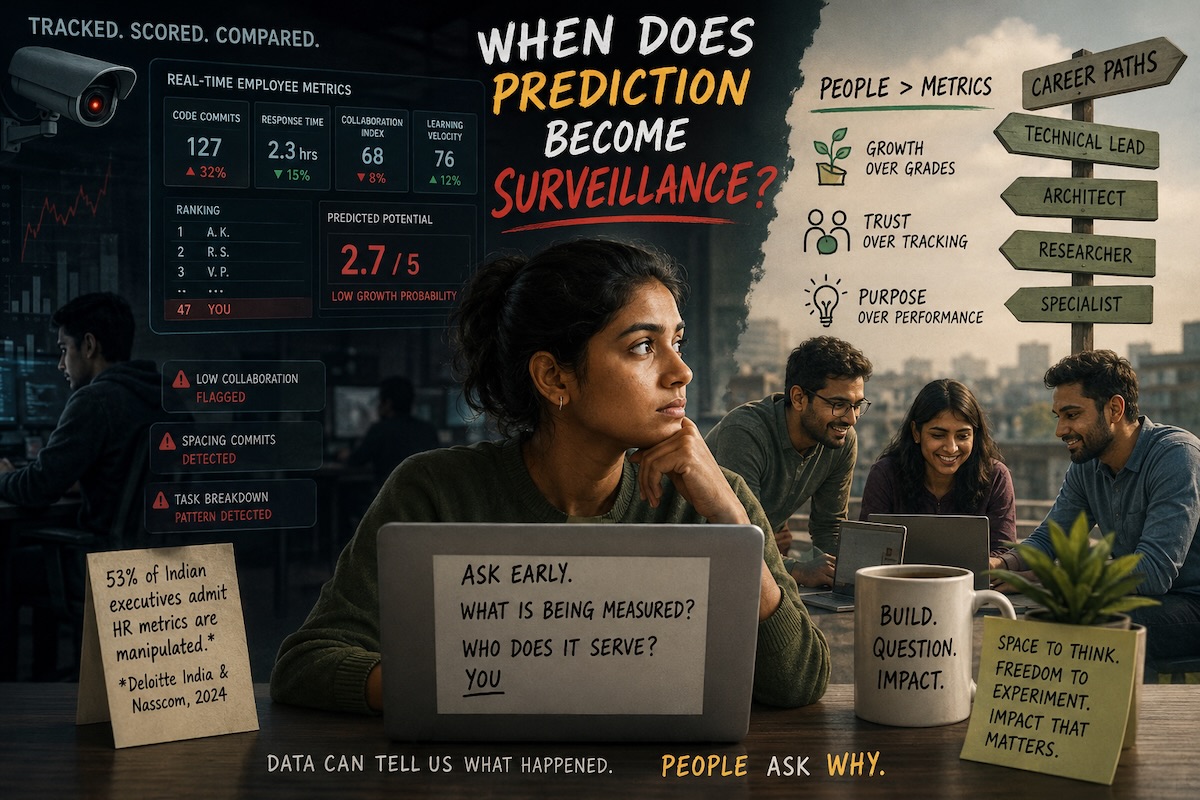
Something that worried me the most when researching about this topic was understanding that the same tools can slide from helping people into watching them. And once young employees realise a metric affects their pay, they start gaming it. Spacing out commits to look busy, breaking one task into ten. Over half of Indian executives, approximately 53 per cent admit that their own HR  metrics are already being manipulated this way (Deloitte India & Nasscom, 2024). When the number becomes the target, it stops meaning anything.

For young people that are entering the work force in India and increasingly elsewhere, the most important skill is not a technical one anymore. It is asking often and early about what is being measured and will it affect what I can do? The organisations doing this well aren’t the ones with the most surveillance. They are the ones redesigning career paths so technical people can rise without becoming managers (Alhalwachi, 2026) and protecting space for employees to think and experiment without every minute being logged.

Data can tell an organisation what happened. It still takes people, especially the people the data is about, to ask why.

References

Alhalwachi, L. (2026). Overcoming the glass ceiling syndrome through digitalization and artificial intelligence in GCC countries. Veredas do Direito, 23(1), 89–112.

Deloitte India, & Nasscom. (2024, August). Advancing India’s AI skills: Interventions and programmes needed / A strategic talent readiness study. NASSCOM Community Publications.

India Today. (2026, July 7). Study finds 95 per cent of IT grads in India lack coding skills, unfit for jobs. India Today.

Joshi, S. (2026). Enhancing BLS methodologies for projecting AI’s impact on employment: A data-driven framework for measuring labor market transformation. Preprints.org, 202603, 1–19.

Quess Corp. (2025). Decoding the AI talent landscape in India: Demand-supply dynamics. Quess Industry Insights.

Share

About the author

G. Sai Prashanth

G. Sai Prashanth is an MSc psychology graduate from Bangalore, India. Grounded in behavioural science and trained in journalism, he brings a rare blend of people insights and storytelling to everything he does. He has hands-on experience in research, stakeholder interviews, and team coordination, with growing expertise in people analytics, multimedia content creation for employer branding, and designing engagement initiatives and organizational interventions. A curious mind drawn to the human side of workplaces, he is passionate about how technology, behavioural insights, and culture come together to shape the future of work. At YourCommonwealth, he writes about politics, sustainability, corporate culture, human resources, and organizations through an Indian lens.  

Related articles

Democracy & ParticipationEntrepreneurship & EmploymentFairness & EquityMigrationPeace and JusticePoverty and Food SecurityUrban Life
View all

Submit your content

Submit a video
Submit an article

by G Sai Prashanth

I spent the last month researching a number that should worry every young person entering tech: for every 10 advanced AI jobs open in India right now, there is roughly one qualified candidate to fill it (Joshi, 2026). Not because people aren’t trying. India’s tech talent pool grew from around 416,000 to 920,000 professionals between 2024 and 2026 (Deloitte India & Nasscom, 2024). This problem is structural. National audits show fewer than 5 per cent of Indian IT graduates can write working code (India Today, 2026). The system that trained us didn’t keep pace with what the market now demands.

So companies did what companies do: they built better tracking. HR teams in the major tech hubs in India now map employees’ skills in real time. How fast someone learns, who they collaborate with, whose code gets reviewed (Quess Corp, 2025). Some of it is genuinely useful. This can help identify hidden mentors and catch early signs of burnout before someone breaks.

Graphic caption: Figure 1: Goodhart’s Law illustration (Created using Chatgpt Image Model)

Something that worried me the most when researching about this topic was understanding that the same tools can slide from helping people into watching them. And once young employees realise a metric affects their pay, they start gaming it. Spacing out commits to look busy, breaking one task into ten. Over half of Indian executives, approximately 53 per cent admit that their own HR  metrics are already being manipulated this way (Deloitte India & Nasscom, 2024). When the number becomes the target, it stops meaning anything.

For young people that are entering the work force in India and increasingly elsewhere, the most important skill is not a technical one anymore. It is asking often and early about what is being measured and will it affect what I can do? The organisations doing this well aren’t the ones with the most surveillance. They are the ones redesigning career paths so technical people can rise without becoming managers (Alhalwachi, 2026) and protecting space for employees to think and experiment without every minute being logged.

Data can tell an organisation what happened. It still takes people, especially the people the data is about, to ask why.

References

Alhalwachi, L. (2026). Overcoming the glass ceiling syndrome through digitalization and artificial intelligence in GCC countries. Veredas do Direito, 23(1), 89–112.

Deloitte India, & Nasscom. (2024, August). Advancing India’s AI skills: Interventions and programmes needed / A strategic talent readiness study. NASSCOM Community Publications.

India Today. (2026, July 7). Study finds 95 per cent of IT grads in India lack coding skills, unfit for jobs. India Today.

Joshi, S. (2026). Enhancing BLS methodologies for projecting AI’s impact on employment: A data-driven framework for measuring labor market transformation. Preprints.org, 202603, 1–19.

Quess Corp. (2025). Decoding the AI talent landscape in India: Demand-supply dynamics. Quess Industry Insights.