Fairness & EquityGender EquityHistorySocial DevelopmentWomen's Empowerment

Modern Feminism in South Asia

August 12th, 2026

by Niyati Asati

In South Asia, where traditional mindsets remain deeply rooted, feminism is more complex than in many Western societies and embracing the label of feminist often requires considerable courage.

‘Motichur’ is a collection of essays by Begum Rokeya that explores the oppression faced by women and argues that their emancipation was essential to India’s independence. Widely regarded as one of the earliest feminist works from the region, it deserves to be highlighted.

However, the only reason Rokeya was able to voice her opinion is because her husband was liberal, a rarity in her times. A few famous works of hers are ‘Sultana’s Dream’, a satirical Utopian story, ‘Padmarag’ and ‘Abarodhbasini’.  She also founded a girls’ school after her husband’s death. Although she was from Bangladesh, her works had a striking impact on the surrounding region, especially since India and Bangladesh had not yet been divided.

She was only one of the many women in the region who fought and represented the issues of contemporary women.

Bangladesh also saw the formation of the Bangladesh Mahila Parishad by Sufia Kamal in 1970, the country’s oldest women’s rights organisation to date. Organisations such as Banchte Shekha (Learn How to Survive) also increased the scope of women’s movement to include various economic sections of society.

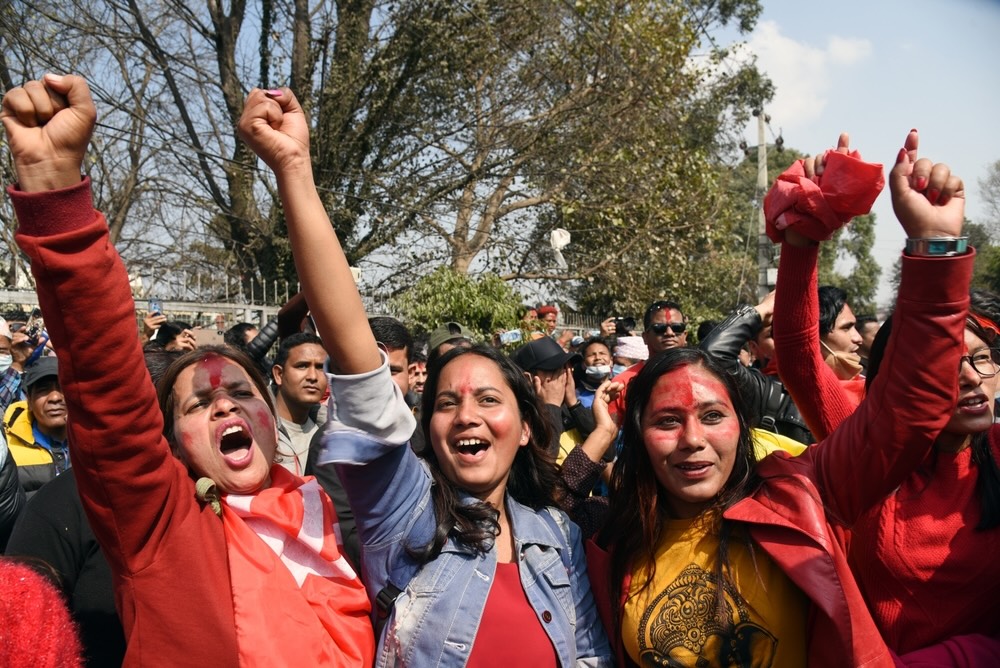
In Pakistan, the women’s movement is best known for the Aurat March, but women have been taking part in public protests since before independence, defying the status quo despite being labelled as shameless.

After Begum Rokeya’s feminist work, Neera Desai’s ‘Woman In Modern India (1957)’, the first scholarly (and first feminist) history of Indian women, included a critique of Indian society:  ‘Towards Equality: The Report of the Committee on the Status of Women’. ‘In India’ (1974) was the next major publication, after Desai, to candidly assess the position of women. India’s first Women’s Studies programs, also begun in the 1970s and introduced women as a research subject. According to Vina Mazumdar, the outspoken Member-Secretary of the committee and author of a minority report, this document set the agenda for new Women’s Studies programs, focusing on policies that would benefit women and convince the social science community to include gender as a category of analysis, and revive the debate on women’s issues. By 1986 the University Grants Commission (UGC) had approved the formation of Women’s Studies centers throughout India devoted to research, teaching, documentation, and outreach.

One of the articles to explore the issue of women and politics in Sri Lanka and obstacles faced by women in entering politics was by Wimala de Silva. Her chapter on “Political Participation and Decision Making” appeared in a seminal publication called “The Status of Women” initiated by a group of university women and published by the University of Colombo in 1979. This article provided a rich and nuanced analysis of the problem of women in politics.

The Burmese Women’s Association, established in 1919, was the first women’s organization in Myanmar (then called British Burma) and was led by the wives of officials and rich women entrepreneurs. It inspired the formation of various other groups which rallied against colonialism. The main focus of feminists in Myanmar was a demand for special laws granting women equal rights with men in marriage, divorce and inheritance and the removal of the “sex disqualification clause” in the law barring women from contesting elections.

In Afghanistan, social reforms for women liberation were among the reasons for sending Amanullah into exile in 1929 and demolishing both the Communist and Republic regimes.

The 1964 constitution formalised their rights, granting universal suffrage and equality. However, Afghanistan’s feminist movement has seen a decline since the return of the Taliban, undoing much of the efforts put in historically.

Modern feminism in this region reflects the resilience of brave women, those willing to stand against the majorly patriarchal society. Since most of these countries are ‘developing’ there is not enough importance given to the concerns raised beyond the growth of the economy. Thus, there arises a need for social support to be provided to the flagbearers of feminism, for those fighting at the forefront.

Niyati Asati is a senior high school student in India with a strong interest in law, public policy and international relations. Aspiring to become a lawyer, she is passionate about advancing justice and is eager to broaden her understanding of the world through research and writing. She enjoys reading a wide range of literature and writing short stories, and hopes to develop the skills and experience needed to make a meaningful contribution in her chosen field.

Share

About the author

Related articles

Democracy & ParticipationNetworkingPeace BuildingPeace and JusticePoliticsYouth Empowerment
Bright IdeasCommonwealthDemocracy & ParticipationNetworkingYouth Development
Data & InformationEducationEntrepreneurship & EmploymentTechnology
View all

Submit your content

Submit a video
Submit an article

by Niyati Asati

In South Asia, where traditional mindsets remain deeply rooted, feminism is more complex than in many Western societies and embracing the label of feminist often requires considerable courage.

‘Motichur’ is a collection of essays by Begum Rokeya that explores the oppression faced by women and argues that their emancipation was essential to India’s independence. Widely regarded as one of the earliest feminist works from the region, it deserves to be highlighted.

However, the only reason Rokeya was able to voice her opinion is because her husband was liberal, a rarity in her times. A few famous works of hers are ‘Sultana’s Dream’, a satirical Utopian story, ‘Padmarag’ and ‘Abarodhbasini’.  She also founded a girls’ school after her husband’s death. Although she was from Bangladesh, her works had a striking impact on the surrounding region, especially since India and Bangladesh had not yet been divided.

She was only one of the many women in the region who fought and represented the issues of contemporary women.

Bangladesh also saw the formation of the Bangladesh Mahila Parishad by Sufia Kamal in 1970, the country’s oldest women’s rights organisation to date. Organisations such as Banchte Shekha (Learn How to Survive) also increased the scope of women’s movement to include various economic sections of society.

In Pakistan, the women’s movement is best known for the Aurat March, but women have been taking part in public protests since before independence, defying the status quo despite being labelled as shameless.

After Begum Rokeya’s feminist work, Neera Desai’s ‘Woman In Modern India (1957)’, the first scholarly (and first feminist) history of Indian women, included a critique of Indian society:  ‘Towards Equality: The Report of the Committee on the Status of Women’. ‘In India’ (1974) was the next major publication, after Desai, to candidly assess the position of women. India’s first Women’s Studies programs, also begun in the 1970s and introduced women as a research subject. According to Vina Mazumdar, the outspoken Member-Secretary of the committee and author of a minority report, this document set the agenda for new Women’s Studies programs, focusing on policies that would benefit women and convince the social science community to include gender as a category of analysis, and revive the debate on women’s issues. By 1986 the University Grants Commission (UGC) had approved the formation of Women’s Studies centers throughout India devoted to research, teaching, documentation, and outreach.

One of the articles to explore the issue of women and politics in Sri Lanka and obstacles faced by women in entering politics was by Wimala de Silva. Her chapter on “Political Participation and Decision Making” appeared in a seminal publication called “The Status of Women” initiated by a group of university women and published by the University of Colombo in 1979. This article provided a rich and nuanced analysis of the problem of women in politics.

The Burmese Women’s Association, established in 1919, was the first women’s organization in Myanmar (then called British Burma) and was led by the wives of officials and rich women entrepreneurs. It inspired the formation of various other groups which rallied against colonialism. The main focus of feminists in Myanmar was a demand for special laws granting women equal rights with men in marriage, divorce and inheritance and the removal of the “sex disqualification clause” in the law barring women from contesting elections.

In Afghanistan, social reforms for women liberation were among the reasons for sending Amanullah into exile in 1929 and demolishing both the Communist and Republic regimes.

The 1964 constitution formalised their rights, granting universal suffrage and equality. However, Afghanistan’s feminist movement has seen a decline since the return of the Taliban, undoing much of the efforts put in historically.

Modern feminism in this region reflects the resilience of brave women, those willing to stand against the majorly patriarchal society. Since most of these countries are ‘developing’ there is not enough importance given to the concerns raised beyond the growth of the economy. Thus, there arises a need for social support to be provided to the flagbearers of feminism, for those fighting at the forefront.

Niyati Asati is a senior high school student in India with a strong interest in law, public policy and international relations. Aspiring to become a lawyer, she is passionate about advancing justice and is eager to broaden her understanding of the world through research and writing. She enjoys reading a wide range of literature and writing short stories, and hopes to develop the skills and experience needed to make a meaningful contribution in her chosen field.