

Artificial intelligence is increasingly part of our technological lives, writes Debra Grace Lim Jia-En, 18, a Commonwealth Correspondent from Malaysia, as she takes a look at the impact of AI and considers where the trajectory could lead.  Tesla’s self-driving cars, Siri, Alexa, smart home devices like Sentri and Roomba. It is clear that artificial intelligence …

“Artificial intelligence: is it our friend or foe?” Read More »

A refugee crisis provides a hot topic for discussion, with viewpoints across the spectrum of the argument. Shiboni D’Souza, 23, a Correspondent from Bangalore in India, argues that a refugee crisis is a test of a host nation’s character.  The manner in which we treat the weakest amongst us is ultimately the basis on which we as …

“Refugee crisis tests a nation’s character” Read More »

Time changes, and the meaning of the words changes with time, writes Mridul Upadhyay, 26, a Commonwealth Correspondent from New Delhi in India, as he explores the meaning of Dharma. ‘Dharma’ is an Indian/Hindi word, which is now usually translated as ‘religion’ in the Indian subcontinent, but the word has lost its pure meaning. There is …

“Dharma is explained for us by nature” Read More »

Among the talk about girls and women, gender equality and reduced inequality, Amit Jain, 26, a Correspondent from Pune, India argues there is one area where women are most harmed, yet few people are working toward innovative solutions. What I’m talking about here is the grave issue of the life of widows. Absent in statistics, unnoticed by …

“Invisible women, invisible problems: widows” Read More »

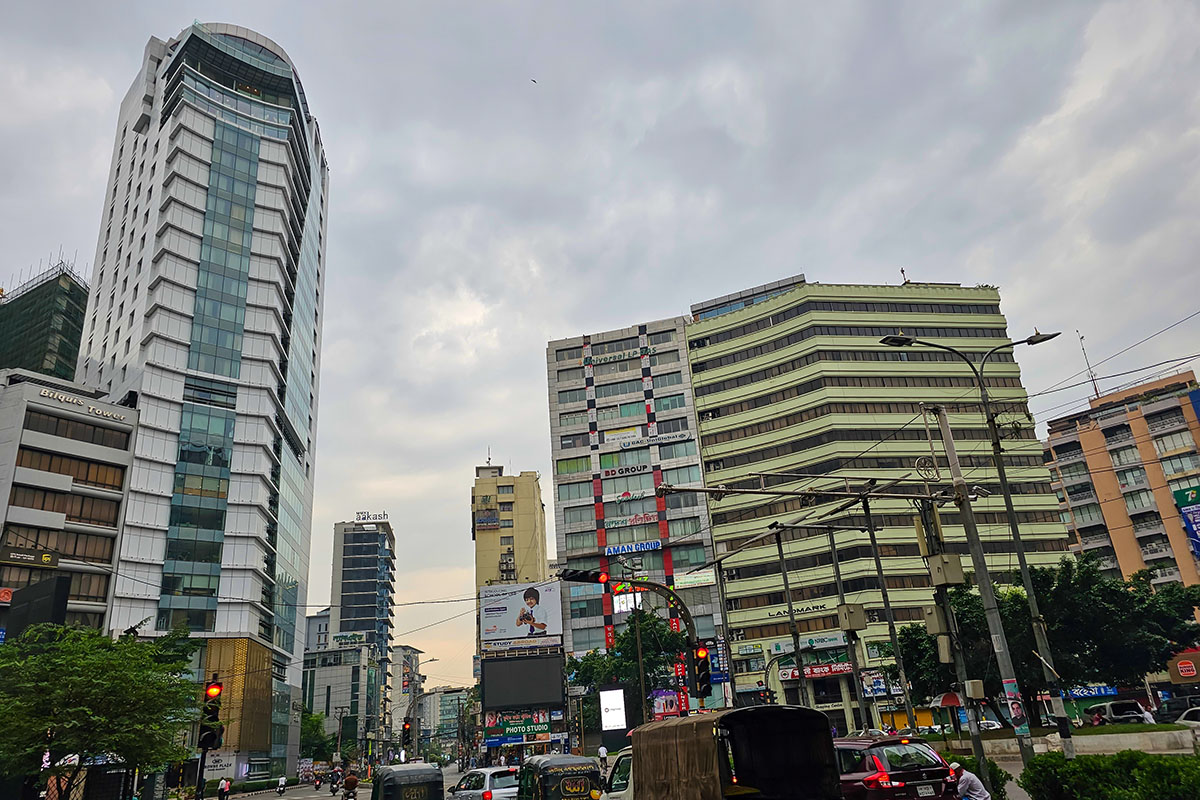
Urbanisation is often cited as a parameter of how well-developed a city is, writes Monica Islam, 26, a Commonwealth Correspondent from Dhaka in Bangladesh. But urban growth can mean new problems and the need to find creative solutions. Urban planning and regeneration are increasingly being sought as solutions to haphazard urban growth. Urban planning has …

“Restaurant boom adds to urban heat sinks” Read More »

Nature has benefited humans in myriad ways, writes Faisal Saleh Yaqub, 25, a Commonwealth Correspondent from Lahore in Pakistan, and can serve as a model for solving today’s problems. The invention of the airplane was inspired by nature. The Wright brothers were able to solve the problems in its design by keenly observing flying birds. Similarly, …

“Understanding through observing nature” Read More »

Mid-century notions of robots and technology were amusing, writes Ratika Singh, 25, a Correspondent from Bhopal in India, but the evolution of artificial intelligence must consider human and natural priorities. A world of robots and advanced technical machines, also known as artificial intelligence, accompanying human beings was good when it was limited to cartoons and …

“Artificial intelligence in our natural world” Read More »

Even as education rates rise, some students are being left behind. Santhiya Ramadas, 27, a Correspondent from Malaysia, describes a unique organisation that gives vulnerable youth a path to skills and a livelihood. You give a poor man a fish and you feed him for a day; you teach him to fish and you give …

“Skills program helps underprivileged youth” Read More »

A simple gift of hospitality prompted Mridul Upadhyay, 26, a Commonwealth Correspondent from New Delhi in India, to consider how small minorities are affected by the pressures of global demand and development. What was the best thing offered to you to eat, as a gesture of hospitality, when you visited someone’s home? For me it …

“Tribal lifestyle is threatened by development” Read More »

An international visit from London’s mayor gave Faisal Saleh Yaqub, 25, a Commonwealth Correspondent from Lahore in Pakistan, opportunity to reflect on peace and cooperation as well as trade and investment. Recently, the mayor of London, Sadiq Khan, made a historic trip to India and Pakistan, on a tour that visited six cities in six days with …

“Mayor’s message of peace and prosperity” Read More »