Environment & Climate ChangeSmall StatesSocial DevelopmentSustainable DevelopmentSustainable Development Goals
Home Our latest stories Climate ChangeConservationEconomic DevelopmentEnvironmental ProtectionSocial DevelopmentYouth Work Reflections from the ECOSOC Youth Forum: Young People as Today’s Changemakers

Reflections from the ECOSOC Youth Forum: Young People as Today’s Changemakers

May 18th, 2026

by Felipe Costa

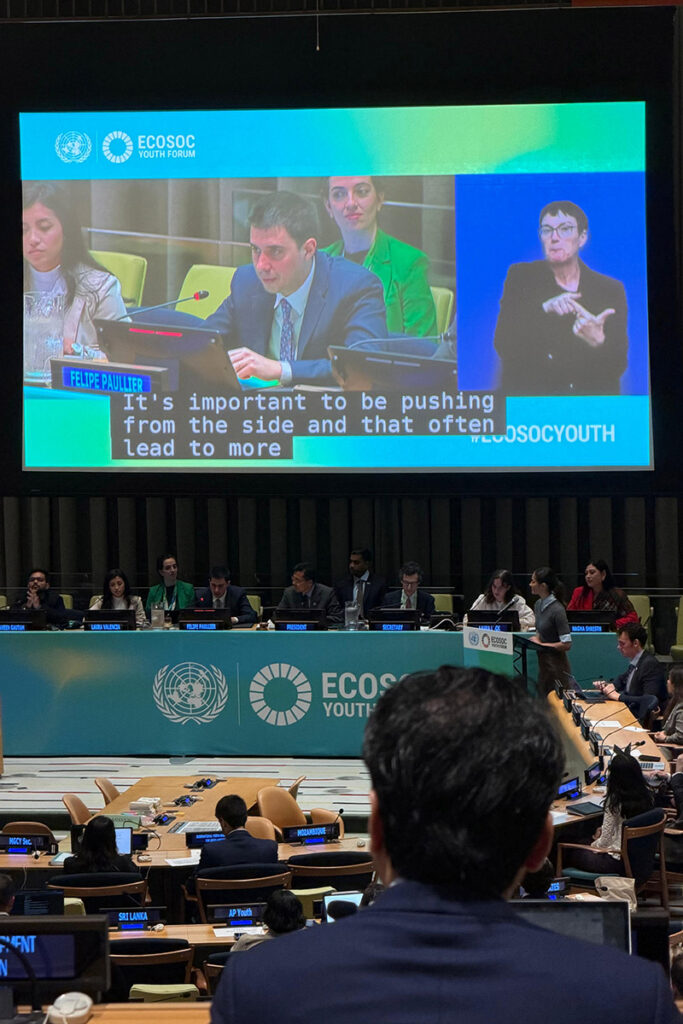
I recently had the unique opportunity to participate in the ECOSOC Youth Forum at the United Nations. Each year, the forum brings together youth delegates, civil society representatives, Member States, and UN officials to discuss youth contributions to sustainable development. The discussions and side events showcased a wide range of ideas and perspectives on how to strengthen youth agency in advancing the Sustainable Development Goals (SDGs).
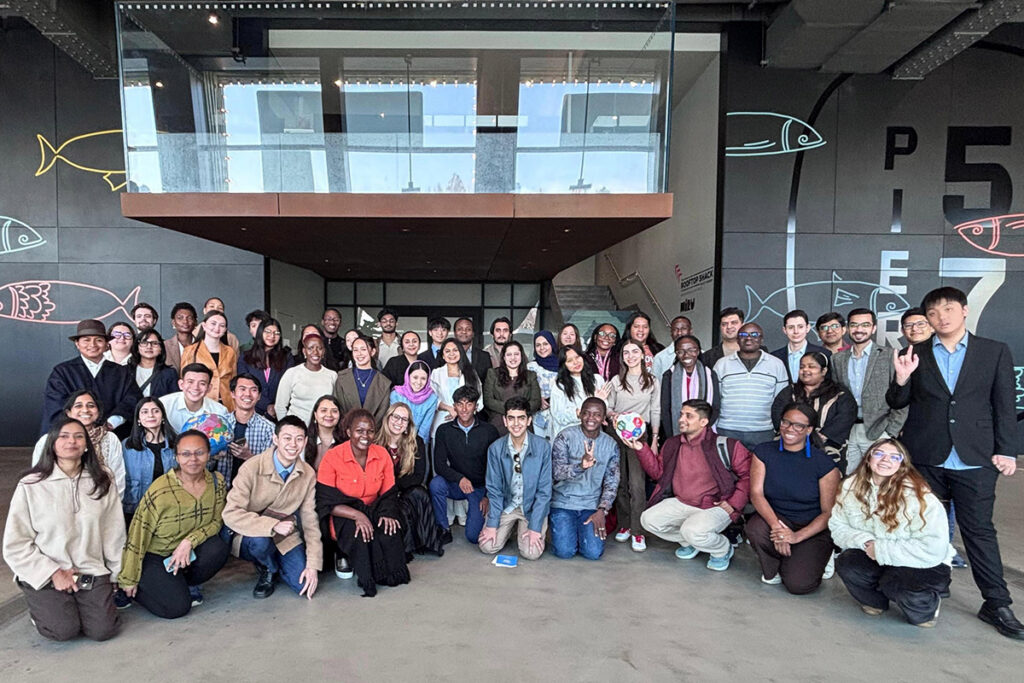
It was inspiring to see first-hand how young people are driving action towards achieving the SDGs in their communities and countries, while also collaborating across regions. We often hear that young people are the future of our countries and the world. However, I want to challenge this and argue that young people are already at the forefront of leading action, influencing policy, and advancing the SDGs. What I came to realise during the three days at the ECOSOC Youth Forum was that young people are not waiting for change – they are active agents and advocates already driving progress towards the SDGs. This is particularly evident across the Commonwealth. With over 60% of its population under the age of 30, young people are leading meaningful action across member states.

Throughout the three days, I saw how young people are actively engaged in their communities and countries. It reinforced the idea that we are not just participants in development – we are leaders, innovators, and changemakers working to achieve the SDGs. During the plenary sessions and side events, young people consistently demonstrated leadership, shared solutions, and held decision-makers accountable.
However, one noticeable gap during the Youth Forum was the limited presence of elected officials. While some youth ministers were in attendance – including at the Commonwealth Youth Council’s side event on Youth-Led Action for the SDGs, with participation from Youth Affairs Ministers from Ghana and Sierra Leone – there was a broader lack of engagement from politicians, particularly at side events. This presents a clear opportunity. Local governments, in particular, could play a stronger role by supporting and financing locally driven, youth-led projects, while also ensuring that the SDGs are not just global commitments, but accessible and impactful for young people in communities everywhere. If we are serious about accelerating progress on the SDGs, stronger partnerships are essential. Local government is the closest level of governance to communities, delivering services and shaping everyday experiences. Increasing collaboration between young people and elected officials at local and regional levels will be critical if we are to make meaningful progress towards delivering the SDGs.
Looking ahead, the focus must not only be on improving SDG attainment but also on shaping what comes next. This comes at a time of unprecedented geopolitical tension and critical moments for the United Nations. By the end of this year, a new Secretary-General will be selected. Additionally, the final SDG Summit will take place next year in New York, marking a crucial moment in the push towards the 2030 Agenda.

What was clear from this year’s ECOSOC Youth Forum is that young people are not holding back. They continue to demand action, accountability, and meaningful inclusion in decision-making, while already driving change on the ground. The task ahead is to match this energy with sustained commitment, stronger partnerships, and the political will needed to accelerate progress on the SDGs.

Filipe is passionate about democracy, with a strong commitment to ensuring young people have a meaningful voice in shaping social impact initiatives and their communities. He currently works as Political Assistant to the Elected Mayor of Watford, United Kingdom, where he helped establish Watford’s Youth Panel and the Mayor’s Faith Forum, expanding engagement among underrepresented communities in local politics. His interests include International Relations and cultural cooperation. His ambition is to work in multilateral organisations, particularly within the Commonwealth and Latin America.

Share

About the author

Submit your content

Submit a video
Submit an article

by Felipe Costa

I recently had the unique opportunity to participate in the ECOSOC Youth Forum at the United Nations. Each year, the forum brings together youth delegates, civil society representatives, Member States, and UN officials to discuss youth contributions to sustainable development. The discussions and side events showcased a wide range of ideas and perspectives on how to strengthen youth agency in advancing the Sustainable Development Goals (SDGs).

It was inspiring to see first-hand how young people are driving action towards achieving the SDGs in their communities and countries, while also collaborating across regions. We often hear that young people are the future of our countries and the world. However, I want to challenge this and argue that young people are already at the forefront of leading action, influencing policy, and advancing the SDGs. What I came to realise during the three days at the ECOSOC Youth Forum was that young people are not waiting for change – they are active agents and advocates already driving progress towards the SDGs. This is particularly evident across the Commonwealth. With over 60% of its population under the age of 30, young people are leading meaningful action across member states.

Throughout the three days, I saw how young people are actively engaged in their communities and countries. It reinforced the idea that we are not just participants in development – we are leaders, innovators, and changemakers working to achieve the SDGs. During the plenary sessions and side events, young people consistently demonstrated leadership, shared solutions, and held decision-makers accountable.

However, one noticeable gap during the Youth Forum was the limited presence of elected officials. While some youth ministers were in attendance – including at the Commonwealth Youth Council’s side event on Youth-Led Action for the SDGs, with participation from Youth Affairs Ministers from Ghana and Sierra Leone – there was a broader lack of engagement from politicians, particularly at side events. This presents a clear opportunity. Local governments, in particular, could play a stronger role by supporting and financing locally driven, youth-led projects, while also ensuring that the SDGs are not just global commitments, but accessible and impactful for young people in communities everywhere. If we are serious about accelerating progress on the SDGs, stronger partnerships are essential. Local government is the closest level of governance to communities, delivering services and shaping everyday experiences. Increasing collaboration between young people and elected officials at local and regional levels will be critical if we are to make meaningful progress towards delivering the SDGs.

Looking ahead, the focus must not only be on improving SDG attainment but also on shaping what comes next. This comes at a time of unprecedented geopolitical tension and critical moments for the United Nations. By the end of this year, a new Secretary-General will be selected. Additionally, the final SDG Summit will take place next year in New York, marking a crucial moment in the push towards the 2030 Agenda.

What was clear from this year’s ECOSOC Youth Forum is that young people are not holding back. They continue to demand action, accountability, and meaningful inclusion in decision-making, while already driving change on the ground. The task ahead is to match this energy with sustained commitment, stronger partnerships, and the political will needed to accelerate progress on the SDGs.

Filipe is passionate about democracy, with a strong commitment to ensuring young people have a meaningful voice in shaping social impact initiatives and their communities. He currently works as Political Assistant to the Elected Mayor of Watford, United Kingdom, where he helped establish Watford’s Youth Panel and the Mayor’s Faith Forum, expanding engagement among underrepresented communities in local politics. His interests include International Relations and cultural cooperation. His ambition is to work in multilateral organisations, particularly within the Commonwealth and Latin America.