Democracy & Participation
Home Our latest stories Peace & Democracy The Perils of Being a Journalist-Writer

The Perils of Being a Journalist-Writer

May 3rd, 2023

by Monica Islam

In Bangladesh, journalism was not a sought-after career even ten years back when I had started. The industry has flourished in the last few years, with more people either starting a career in journalism or opening up a media grooming institute. Even within the narrow branch of journalism, there are various roles (such as stringer, editor, reporter) and work designs (e.g. freelance, staff member). Whatever the role or layout is, there are certain risks that we as journalists or writers have to face.

Lack of professionalism

No matter how much invested we are in a story or reportage, we are only performing our job. We hardly have a personal stake in the news, unless it also happens to be related to a cause that we are supporting. For instance, interviewing an atheist does not necessarily mean that we share or endorse the person’s views. Most of the time, we are neutral about it. We only reject an assignment if it is something that we do not want to undertake for a myriad of reasons, such as health concerns, religious sentiments, etc.

Personal vilification

If we take a strong position in a debate, it is a given that our opponents will hurl all sorts of abuses, but the matter takes an ugly turn when they extract and publicise our personal information that we would not like to have on public display. The line that we carefully drew between our personal self and our professional self is ruthlessly erased. The privacy intrusion can get extreme, for instance, when we are stalked online and offline. Such espionage can be physically intimidating too.

Sexualized feedback

Most women journalists or media personalities will agree that they often receive lewd remarks (e.g. the shape, size, or colour of their private sexual parts) in relation to their work. For example, instead of being commented about on the content of their work, they are often threatened with sexual harassment. This takes away attention from their work and they are only portrayed as a sexual object devoid of any intellect.

On World Press Freedom Day, as a journalist-writer, I fervently hope that these aforementioned risks are eliminated so that more people can join this industry.

Share

About the author

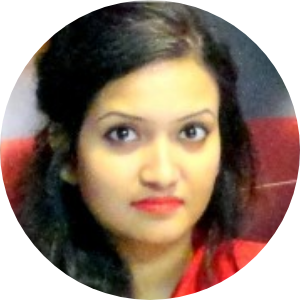
Monica Islam

Monica has fourteen years of experience in the media sector in Dhaka, Bangladesh. She raised awareness about contemporary socio-economic issues, such as the need for greater accountability in the healthcare and food industries; improving diplomatic ties with non-Muslim communities; and encouraging responsible business practices. She was trained in writing and reporting news by Thomson Reuters Foundation in the United Kingdom. She attended student conferences in Austria, Indonesia, South Korea and China. In 2011, she won the Reader’s Digest (Asia) Health Contest. She volunteers for Your Commonwealth Youth Magazine. She earned a Bachelor of Business Administration in Finance & Accounting and Marketing from North South University, Bangladesh. She is interested in sustainable development. If given a magical power, Monica would eradicate death, diseases, absolute poverty, and repression.

Related articles

Democracy & ParticipationYouth DevelopmentYouth NetworksYouth Work
Democracy & ParticipationGovernanceNetworkingPoliticsYouth EmpowermentYouth Networks
Democracy & ParticipationEnvironment & Climate ChangeNetworkingSustainable DevelopmentYouth DevelopmentYouth EmpowermentYouth Policy
View all

Submit your content

Submit a video
Submit an article

by Monica Islam

In Bangladesh, journalism was not a sought-after career even ten years back when I had started. The industry has flourished in the last few years, with more people either starting a career in journalism or opening up a media grooming institute. Even within the narrow branch of journalism, there are various roles (such as stringer, editor, reporter) and work designs (e.g. freelance, staff member). Whatever the role or layout is, there are certain risks that we as journalists or writers have to face.

Lack of professionalism

No matter how much invested we are in a story or reportage, we are only performing our job. We hardly have a personal stake in the news, unless it also happens to be related to a cause that we are supporting. For instance, interviewing an atheist does not necessarily mean that we share or endorse the person’s views. Most of the time, we are neutral about it. We only reject an assignment if it is something that we do not want to undertake for a myriad of reasons, such as health concerns, religious sentiments, etc.

Personal vilification

If we take a strong position in a debate, it is a given that our opponents will hurl all sorts of abuses, but the matter takes an ugly turn when they extract and publicise our personal information that we would not like to have on public display. The line that we carefully drew between our personal self and our professional self is ruthlessly erased. The privacy intrusion can get extreme, for instance, when we are stalked online and offline. Such espionage can be physically intimidating too.

Sexualized feedback

Most women journalists or media personalities will agree that they often receive lewd remarks (e.g. the shape, size, or colour of their private sexual parts) in relation to their work. For example, instead of being commented about on the content of their work, they are often threatened with sexual harassment. This takes away attention from their work and they are only portrayed as a sexual object devoid of any intellect.

On World Press Freedom Day, as a journalist-writer, I fervently hope that these aforementioned risks are eliminated so that more people can join this industry.